November 2025

Acts-To the Ends of the Earth – Day 18

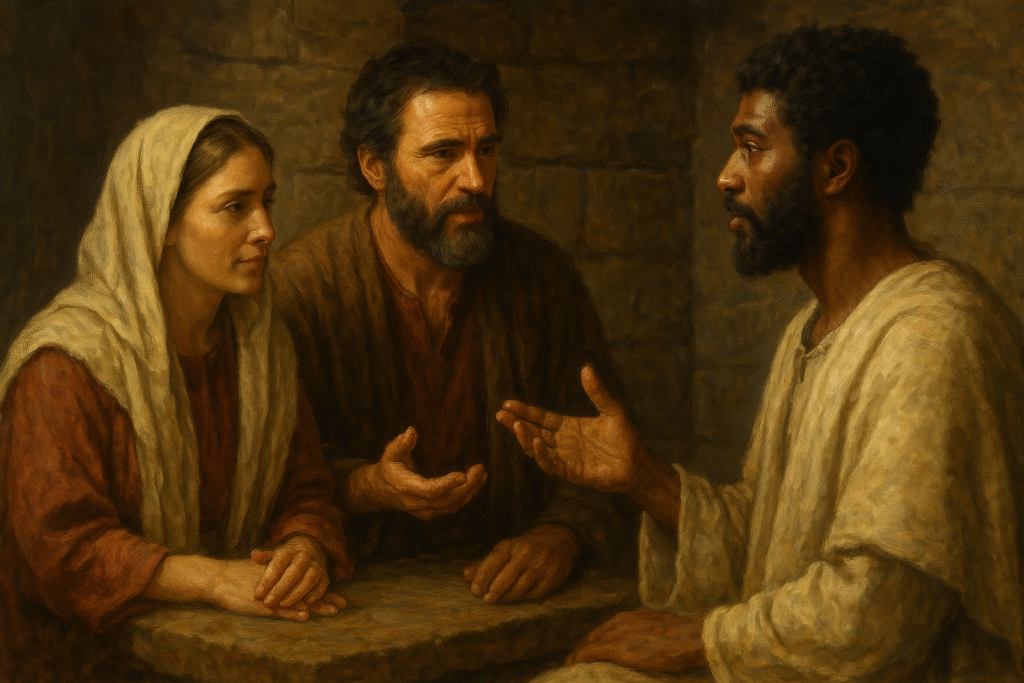
ACTS 18- Faithfulness in Corinth and the Gift of Godly Community In Acts 18, Paul enters Corinth. This city was loud, busy, wealthy and spiritually confused. Yet this is exactly where God planted him for a season of deep ministry. If you have ever stepped into a new place with mixed emotions you will see yourself in this chapter. A New Beginning in a Hard City Corinth was a major Roman colony about forty six miles from Athens. When Paul arrived, he met Aquila and Priscilla who had recently left Rome because Emperor Claudius expelled the Jews. Many scholars believe this conflict began because of arguments in the synagogues about Jesus. Aquila and Priscilla were likely already believers when they met Paul and this connection became a beautiful example of Godly partnership. Paul stayed with them and worked as a tentmaker while preaching every Sabbath to both Jews and God fearing Greeks. God had placed him in a home that was safe and spiritually aligned so he could do the work ahead. Strength Arrives When You Need It Most Later, Silas and Timothy came from Macedonia with encouragement and support. This refreshed Paul and helped him preach with even greater conviction. Still, not everyone wanted to hear the truth. Paul eventually said to those who rejected the message, “Your blood be on your own heads. I am innocent. From now on I will go to the Gentiles.” He was not quitting. He was sensitive to God and knew when to move to the next group of people who were ready. Even in the midst of resistance God was working. Crispus, the ruler of the synagogue, believed in the Lord along with his whole household. Many others in Corinth believed and were baptized as well. God Speaks Directly to Paul’s Fears At a key moment God spoke to Paul in a vision.“Do not be afraid but keep on speaking and do not be silent for I am with you and no one will attack you to harm you for I have many in this city who are my people.” This was God’s way of saying“Stay. I know you feel tired and uncertain. I know this assignment looks bigger than you but I am working here. Do not leave before the harvest.” Paul stayed in Corinth for a year and six months. It became one of his longest seasons of ministry and during this time he wrote the letters of First and Second Thessalonians. God Even Works Through Legal Systems When Paul was brought before Gallio the Roman proconsul the Lord turned the situation for good. Gallio dismissed the accusations and ruled that this was an internal religious matter. This protected the early believers and set a legal precedent that helped the church grow. A man named Sosthenes was beaten during the uproar yet later someone named Sosthenes appears with Paul as a believer in First Corinthians. Only God can turn an enemy into a brother. Aquila and Priscilla Show Us Mature Discipleship After some time Paul left Corinth. He traveled to Cenchreae where he cut his hair to complete a vow of gratitude. He then sailed for Syria and left Aquila and Priscilla in Ephesus. Not long after, they encountered Apollos, a talented teacher from Alexandria. He knew about Jesus as far as John’s baptism but he did not yet understand the fullness of the gospel or the outpouring of the Holy Spirit. Aquila and Priscilla took him aside privately and “explained the way of God more accurately.” Their humility and wisdom show us that spiritual correction does not have to be harsh or public. It can be gentle private and transformative. Apollos went on to become a powerful minister.   Acts 18 teaches us that God calls us into places that may seem difficult yet He always provides the right people at the right time. It shows us that opposition does not always mean stop. Sometimes it simply means shift. It reminds us to stay teachable like Apollos and to correct others with grace like Aquila and Priscilla. Most of all it reveals a God who says “Do not be afraid. I am with you.” PrayerFather I thank You for the reminder that You place us exactly where we need to be. Give me the courage to speak when You tell me to speak and the wisdom to step aside when You lead me to shift. Surround me with Godly community just as You did for Paul in Corinth. Help me remain humble like Aquila and Priscilla and open to learning like Apollos. Strengthen my faith so I can stay planted until Your work in me is complete. I trust that You have many people in every place You send me. In Jesus’ name Amen

Acts-To the Ends of the Earth – Day 18 Read More »
ACTS- To the Ends of the Earth- Day 17

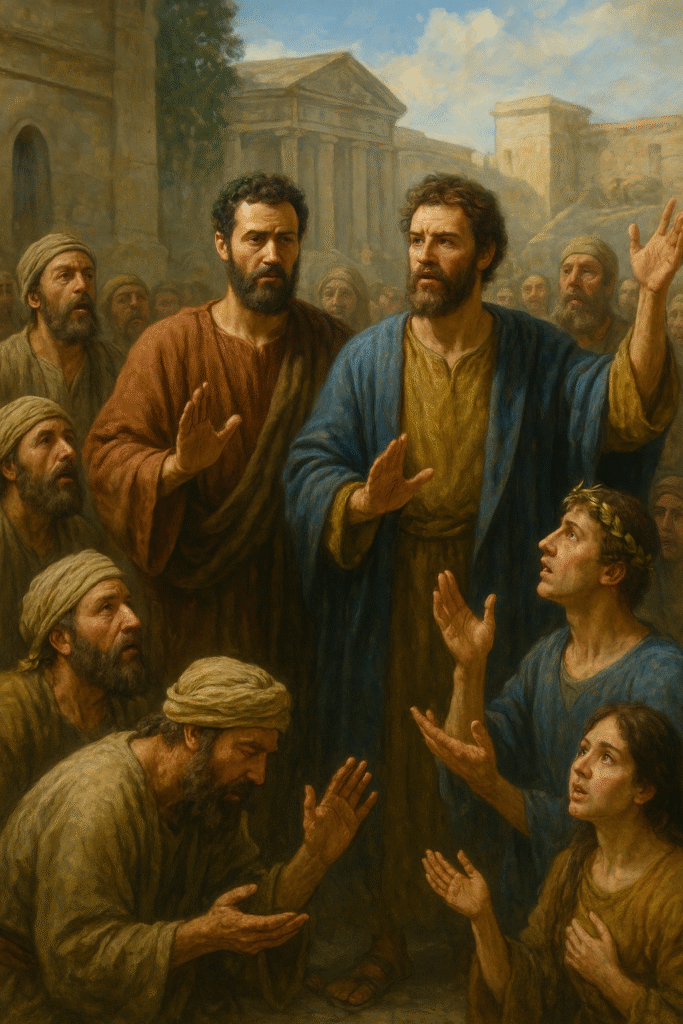
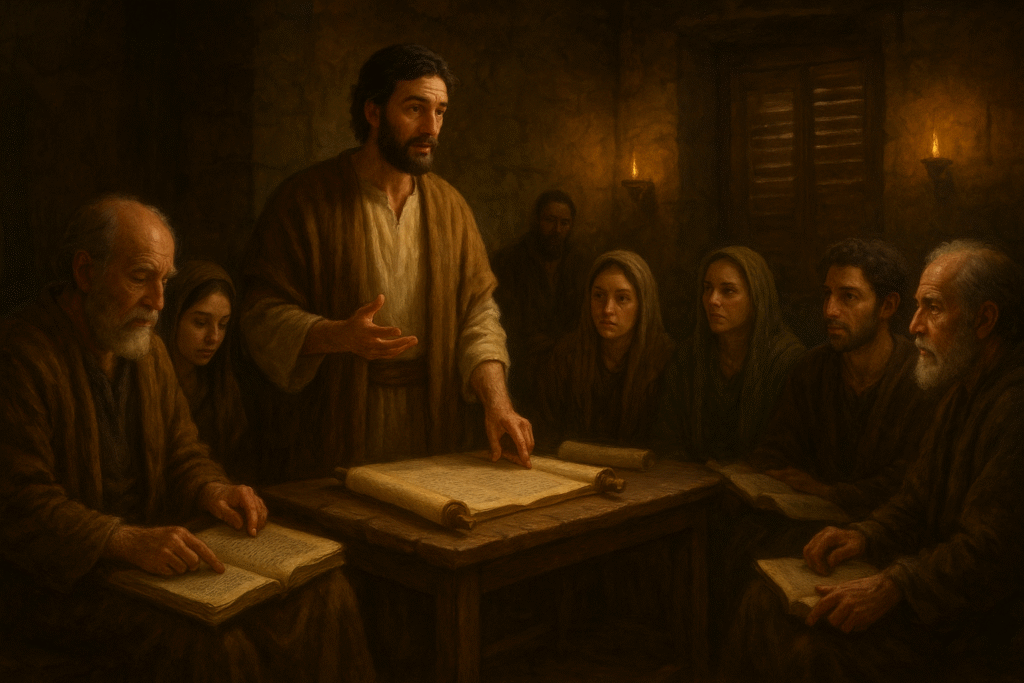
ACTS 17- Being A Berean Acts 17 takes us on a journey along the Egnatian Way, a major Roman highway that connected key cities across Macedonia. Philippi, Amphipolis, Apollonia, and Thessalonica lined this route, each separated by about a day’s walk. When Paul arrived in Thessalonica, Scripture says he reasoned with the Jews for “three Sabbath days,” but his ministry there likely extended well beyond that short window, as his letters later reflect. In the synagogue, Paul opened the Scriptures and taught that “it was necessary for the Christ to suffer and to rise from the dead” (Acts 17:3). This was not a new idea. The Old Testament had always made it clear — Psalm 22, Isaiah 53, and the prophecies of Zechariah all pointed to a suffering Messiah. Yet the people struggled to reconcile a victorious Savior with the image of a rejected Servant. Even so, some Jews believed, and many God-fearing Greeks embraced the message. Scripture even highlights that prominent women were part of those who received the gospel, showing that the early church cut across gender, class, and culture. But the same message that softened some hearts hardened others. As the crowds grew, the Jews who rejected Paul’s teaching grew jealous. They were losing influence, losing control, and losing the crowd. Jealousy always reacts with hostility. They stirred up trouble in the city, forcing Paul to leave and travel nearly fifty miles to Berea. The Bereans, however, were different. They were described as “noble,” not in status alone but in spirit. They listened with openness, and they examined the Scriptures daily to see whether Paul’s teaching was true. They did not accept the word blindly and they did not reject it blindly. They tested it against what God had already spoken. That posture invited revelation. That hunger attracted the Holy Spirit. Many of them believed. This challenges us today. God honours a heart that searches. Not a heart that is suspicious but a heart that is sincere, humble, and eager to know Him. The Bereans remind us that we cannot live on borrowed truth. We must examine the Scriptures ourselves and depend on the Spirit to give us understanding. In time, the same opposition that pushed Paul out of Thessalonica found its way to Berea. Paul was escorted away while Silas and Timothy remained. Their paths branched for a time, Paul went on to Athens, and from there to Corinth, while Silas and Timothy brought updates and encouragement to the churches Paul had planted. Athens stood as a center of culture, philosophy, and religion. Its skyline was filled with temples and idols, including the towering Parthenon. Yet beneath its sophistication was deep spiritual confusion. When Paul walked through the city, “his spirit was provoked within him” (Acts 17:16) because everywhere he turned he saw altars dedicated to powerless gods. There was a Jewish community there, and there were devout seekers, but Paul’s ministry in Athens looked different. There were no recorded miracles. No large gatherings. No church formed. He stood alone,  yet he stood boldly. He reasoned with Stoic and Epicurean philosophers, and they brought him to the Areopagus, the council seat where ideas were weighed and judged. Standing before intellectual giants, Paul did what only the Holy Spirit can empower someone to do: he built a bridge. He pointed to an altar inscribed “To the unknown god.”And he declared that the God they did not know was the God who made the world. Paul taught them that God is the Creator who does not live in temples and cannot be shaped by human crafts. He told them that God made every nation from one man, Adam, confronting any pride or racism subtly woven into their worldview. He said God created humanity so that we would seek Him, and even “feel our way toward Him,” though He is never far. Paul even quoted their own poets, saying, “In Him we live and move and have our being,” and “we are His offspring.” Not to affirm their philosophy, but to reveal the truth buried beneath it. Then Paul moved from the familiar to the eternal — from their poetry to Christ.He declared that God once overlooked ignorance, but now calls all people to repent because a day of judgment is fixed. The proof of this coming judgment is the resurrection of Jesus. Some mocked. Some hesitated. Some believed.And that is the nature of the gospel.It never leaves people neutral. Acts 17 shows us that the message of Christ meets people in different conditions — jealousy in Thessalonica, hunger in Berea, and philosophical confusion in Athens. But no matter the soil, the seed remains the same, and the Spirit gives the growth. PrayerFather, thank You for the example of Paul who carried the gospel with courage into every environment—hostile, curious, and confused. Give me the heart of a seeker like the Bereans. Make me hungry for Your word and quick to examine whatever I hear in the light of Scripture. Help me stand confidently in places where faith seems strange and truth seems foreign. Teach me to build bridges, speak with wisdom, and trust the Holy Spirit to open hearts. Let my life be a witness that You are not far from any of us. In Jesus’ name, Amen.

ACTS- To the Ends of the Earth- Day 17 Read More »

ACTS- To the Ends of the Earth- Day 16

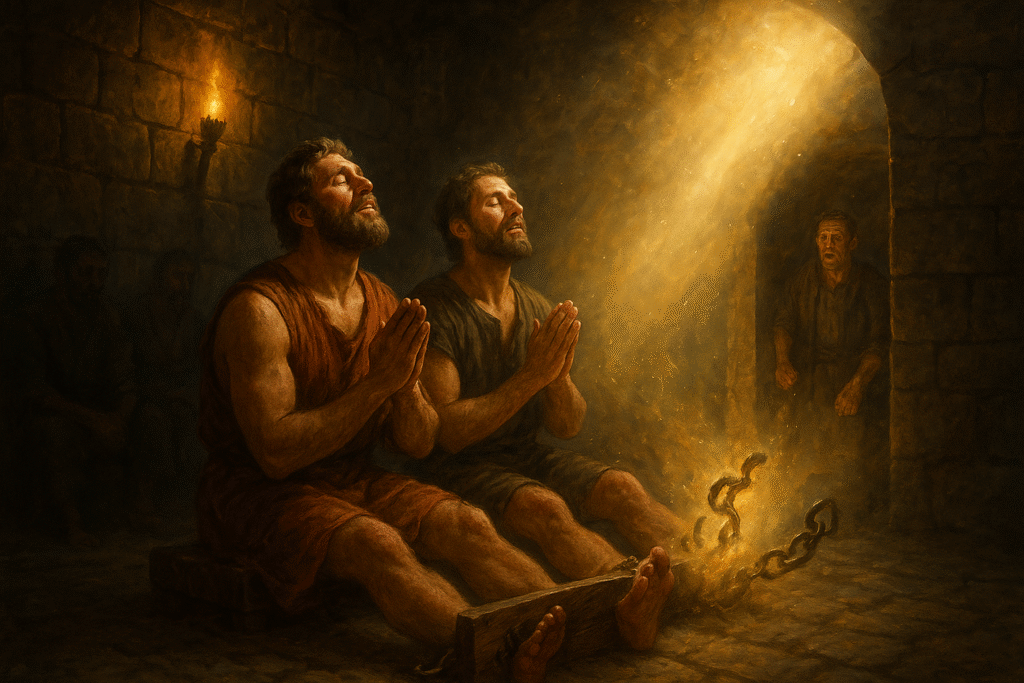
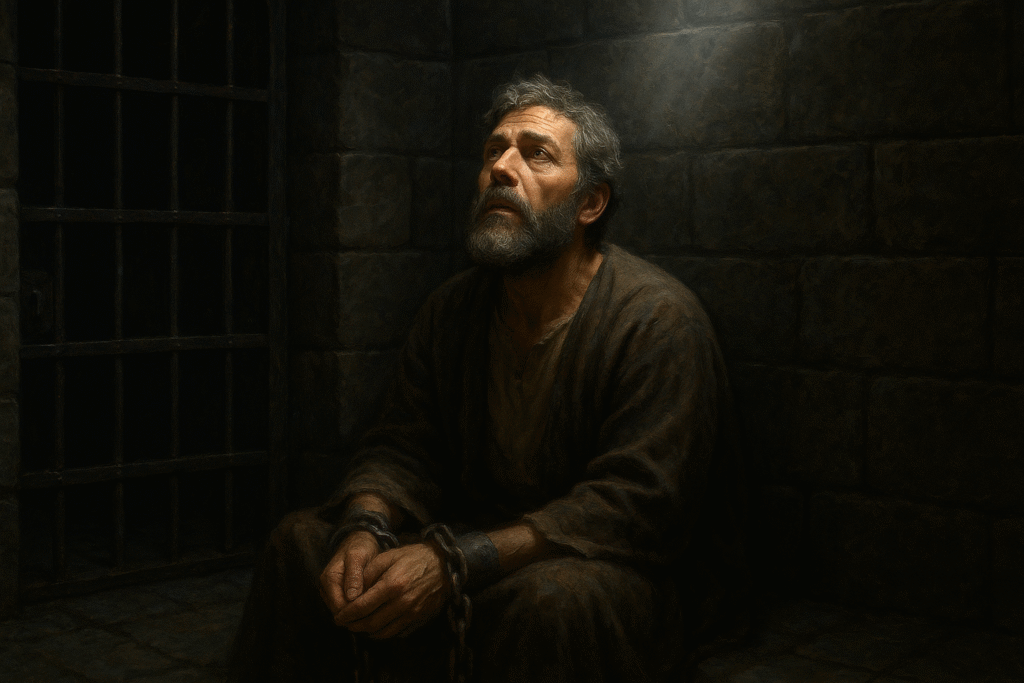
ACTS 16- Leadings, Liberations and False Accusations Acts 16 is one of the richest chapters in the book of Acts because it shows how the Holy Spirit guides the believer, how the gospel breaks strongholds in real time, and how God births a church in the most unexpected way. Through Timothy Lydia the slave girl and the Philippian jailer we witness God forming a community from people who had nothing in common except their response to Christ. Timothy, A Son in the Faith When Paul returned to Lystra he met Timothy again. Most scholars believe Timothy came to Christ through Paul during his earlier visit to the region. Timothy’s mother and grandmother were devout Jewish believers who taught him the Scriptures from childhood. His father was Greek which meant Timothy was considered Jewish by lineage but uncircumcised by practice. Paul circumcised Timothy. This was not a salvation issue because the Jerusalem council had already settled that. It was a strategy for witness. Paul reasoned that if Timothy entered a synagogue uncircumcised it would immediately shut every door. Paul never compromised the gospel but he removed barriers when doing so would help someone hear the truth. There is a lesson here. Sometimes God will require us to lay down personal rights or preferences so that our witness remains effective. Spiritual maturity often looks like doing the uncomfortable thing to advance the kingdom. When the Spirit Says No As Paul and his team traveled west they intended to preach in Asia and then in Bithynia but the Holy Spirit stopped them both times. Scripture does not explain how the Spirit blocked them. It only reveals that God prevents and redirects for reasons that may not be clear in the moment. Then in Troas Paul had the Macedonian vision. A man pleaded with him saying come over to Macedonia and help us. Immediately they obeyed. This vision marked the first recorded gospel mission into Europe. It reminds us that divine guidance does not only come through open doors but also through closed ones. Lydia, A Prepared Heart When they reached Philippi they found no synagogue which shows how few Jews lived there. Instead Paul met a group of women praying by the river. Among them was Lydia a wealthy businesswoman who sold purple cloth. She was a worshiper of God but she did not yet know Christ. Scripture says the Lord opened her heart to pay attention to Paul’s words. This is the true work of salvation. God prepares the heart before the message is preached. Lydia believed and her entire household was baptized. She insisted the missionaries stay in her home and her home later became the meeting place of the Philippian church. The first convert in Europe was a woman of influence and hospitality whom God had been drawing for a long time. The Slave Girl and Spiritual Warfare A slave girl with a spirit of divination followed Paul for many days. Her words were technically true but the source was demonic. Paul discerned the spirit behind her speech and cast it out in the name of Jesus Christ. This was a spiritual confrontation with economic consequences. Her masters lost their income and stirred the city to riot against Paul and Silas. The gospel will always expose darkness and when idols fall those who profit from them rise up in anger. Beaten but Singing Paul and Silas were beaten with rods. Roman colonies used wooden rods bound together to show the authority of their magistrates. The men were severely wounded and thrown into the inner prison with their feet fastened in stocks. Yet Scripture says at midnight they were praying and singing hymns to God. Their joy was not based on comfort or freedom. It was based on the honor of suffering for Christ. Their worship shook the atmosphere so much that the other prisoners listened. Then God shook the earth. Doors opened and chains fell off. The Jailer and the Midnight Miracle Thinking the prisoners had escaped the jailer prepared to end his life. Roman officials often faced execution for losing prisoners. But Paul shouted do not harm yourself we are all here. The jailer fell before Paul and Silas trembling and asked the question every believer must answer. What must I do to be saved? Paul replied believe in the Lord Jesus and you will be saved. The jailer gathered his whole household to hear the gospel. They believed. They were baptized. The jailer washed the wounds of the very men he had imprisoned and then rejoiced with deep spiritual joy. God formed a church that night. A wealthy woman a delivered slave girl and a Roman jailer became the foundation of the Philippian congregation. Only God can build a family out of such different stories. Clearing Their Name The next morning the magistrates tried to release Paul and Silas quietly. Paul refused. He insisted on public acknowledgment of their innocence because they were Roman citizens who had been beaten unlawfully. His decision protected the future church in Philippi by proving that the missionaries had broken no laws. PrayerFather thank you for the wisdom and power revealed in Acts 16. Open our hearts the same way you opened Lydia’s heart so that we receive and understand your word. Give us discernment to recognize spiritual distractions and boldness to confront darkness. Teach us to praise you even in difficult seasons. Let our lives be a witness that draws others to ask what must I do to be saved. Build in us the unity love and courage that marked the early church. In Jesus name amen. 

ACTS- To the Ends of the Earth- Day 16 Read More »

ACTS- To the Ends of the Earth – Day 15

ACTS 15- The Freedom of the Gospel Acts 15 is one of the most important chapters in the entire New Testament. It records the first major doctrinal conflict of the early church and how the Apostles discerned the will of God through Scripture, testimony, and the guidance of the Holy Spirit. It reveals how easily people can add unnecessary burdens to the gospel, how quickly culture can mix with faith, and how God protects the simplicity of salvation. This chapter shows us that the gospel is strong enough to stand on its own and gentle enough to meet every believer where they are. Acts 15:1–5 – A Demand for Circumcision The church in Antioch was thriving. God had brought many Gentiles into the faith. Paul and Barnabas had returned from their missionary journey with testimonies of salvation and miracles. Yet certain Jewish Christians arrived teaching that Gentiles must be circumcised in order to be saved. They were genuinely concerned for holiness, but they confused ceremonial laws with moral laws. Circumcision had been a physical sign under the Mosaic covenant. These teachers assumed that following Jesus required Gentiles to take on the full Jewish identity. Paul and Barnabas confronted this openly because the purity of the gospel was at stake. If salvation required Christ plus something else then the cross was not enough. This disagreement became so significant that the church sent them to Jerusalem for a formal decision. Acts 15:6–11 Peter’s Testimony The Apostles and elders gathered for a full council. There was real debate and thoughtful reasoning. Scripture was considered. The ministry of Jesus was remembered. They were not casual with doctrine. Peter stood and reminded them of Cornelius. Years earlier he watched God pour out the Holy Spirit on Gentiles who simply believed. God cleansed their hearts by faith. Peter confessed that even the Jews had never been able to perfectly obey the law. If salvation depended on perfect obedience then no one would be saved. He concluded that there is only one way into the kingdom of God. Salvation is by the grace of the Lord Jesus Christ for both Jew and Gentile. Acts 15:12–21 James Confirms the Decision James, the brother of Jesus, was the leader of the Jerusalem church. When he spoke, he spoke with spiritual authority and clarity. He affirmed Peter’s testimony. Then he quoted the prophets to show that Scripture had always pointed to this moment. God promised to gather a people for His name from all nations. James insisted that Gentiles should not be troubled with ceremonial laws. However he encouraged them to stay away from practices that would unnecessarily offend Jewish believers. This would help the two groups fellowship as one body. It was not law keeping for salvation but wisdom for unity. Acts 15:22–35 A Letter of Freedom and Peace The council sent a letter back to Antioch. It affirmed that Gentile believers were full members of God’s family. It confirmed that salvation was by grace alone through faith alone. The letter also explained the few practices necessary for unity within mixed communities of Jews and Gentiles. The church in Antioch rejoiced. The gospel had been defended. They were reminded that the Holy Spirit guided the church then and He guides us now. Acts 15:36–41 A Sharp Disagreement and a Sovereign God Paul wanted to revisit the new churches. Barnabas wanted to take John Mark again. Paul did not trust Mark because he had abandoned them earlier. Their disagreement became so sharp that they parted ways. Yet God used even this tension for His purposes. The work multiplied. Two teams were formed. The gospel spread faster. Mark eventually matured and Paul later called him useful to ministry. God wastes nothing. Not even disagreements. Lessons for Today Do not add to the gospel. Salvation is only through Christ. Not culture. Not rituals. Not personal standards. God speaks through Scripture, testimony, unity, and the Spirit. Doctrine is discerned through community. Cultural sensitivity helps fellowship. Love may ask us to restrict our freedom for the sake of others. Disagreements do not destroy God’s plan. He can turn conflict into multiplication. God chooses people from every nation for His name. The gospel tears down dividing walls that culture builds. PrayerFather I thank You that salvation is a gift that cannot be earned. Thank You for making the gospel simple and pure. Help me to guard my heart from adding burdens where You have offered grace. Give me wisdom to walk in unity with other believers even when our backgrounds are different. Teach me to be patient kind and humble as Peter and James were in discerning Your will. Strengthen Your church to follow the leading of the Holy Spirit. Use my life to bring glory to Your name among all people. In Jesus name Amen.

ACTS- To the Ends of the Earth – Day 15 Read More »

ACTS-To the Ends of the Earth- Day 14

Acts 14 – Strength for the Work Acts 14 continues the account of Paul and Barnabas on their first missionary journey. This chapter records both great spiritual breakthroughs and intense opposition, reminding us that the work of God often advances through pressure, perseverance, and grace. Acts 14:1 Paul and Barnabas entered the synagogue in Iconium and spoke in a way that led many Jews and Greeks to believe. This follows the same pattern we saw in Antioch. They began with the synagogue because the Jews already regarded the Scriptures as the Word of God. It was the natural starting point for proclaiming the Messiah. However, as always, when the Word is received by some, it is resisted by others. Acts 14:2- 3 Unbelieving Jews stirred up the Gentiles against Paul and Barnabas. Yet God responded by giving the apostles boldness while confirming the truth of the message through signs and wonders. Spiritual opposition is not proof of failure. Many times opposition shows that the work of God is taking root. Acts 14:4 Both Paul and Barnabas are called apostles. The word means sent ones. In a technical sense it refers to those specifically chosen and commissioned by Christ for the proclamation of the gospel. Paul understood his calling as an apostle in this sense because he had seen the risen Christ and been appointed by Him. Ministry is not casual. It is a calling. Acts 14:8 to 10 In Lystra, a city without a synagogue and filled mostly with Gentiles, Paul met a man crippled from birth. The Holy Spirit enabled Paul to perceive that the man had faith to be healed. Paul commanded him to stand and the man rose instantly. This miracle was not only a physical restoration. It was a public sign that God was at work through these messengers. Acts 14:11 – 13 — The Worship Confusion The people of Lystra reacted in a surprising way. Speaking in their native Lycaonian language, they declared that the gods had come down in the likeness of men. They called Barnabas Zeus and Paul Hermes. A local priest ran to the gate with oxen and garlands to offer sacrifice. This moment deserves careful reflection. The crowd’s response reveals how easily people can mistake the messenger for the source of power. The miracle pointed to God, but the people saw the immediate instruments of grace and reached for objects of worship. Their reaction also shows how religious imagination interprets power through familiar cultural frames. They did not yet know the God who acts, so they translated the event into what made sense to them — pagan categories of gods and heroes. Paul and Barnabas were quick to correct them. They tore their garments in horror at the idea that they should be worshiped. They urged the people to turn from worthless idols and to worship the living God who made heaven and earth. Their response models humility, theological clarity, and pastoral urgency. When God works through us, our role is never to claim glory. It is to point people back to the Creator. This episode also reminds us to examine how we and our communities respond to spiritual experiences. Do we point people to Jesus, or do we elevate the messenger, the experience, or our tradition? True worship always redirects glory to God. Acts 14:17 Paul went on to say that God has not left Himself without witness. The rain, the seasons, the food we eat, and the joy of ordinary life are signs of God’s goodness. Even in a pagan town, the fingerprints of God were visible. This is the beginning of Paul’s approach to Gentile audiences, later developed in his speech at Mars Hill. Acts 14:19 to 20 Those same crowds later turned violent. Jews from neighboring cities stirred up the mob. Paul was stoned, dragged out of the city, and left for dead. But the next day he rose and returned to the city. He refused to let violence end the mission. This is a picture of resilience that only the Spirit can produce. Paul had been severely beaten, but he continued. His courage shows that the mission matters more than comfort. Acts 14:21- 23 Paul and Barnabas went on to Derbe, then retraced their steps through Lystra, Iconium, and Antioch. They strengthened disciples, appointed elders in every church, and encouraged believers to remain steadfast in the faith. Structure, leadership, and pastoral care followed evangelism. Planting churches requires both evangelistic power and wise organization. Acts 14:24 to 28 They returned to Antioch and reported all that God had done among the Gentiles. Their journey closed with worship and thanksgiving. The mission had been costly. It had been risky. It had also been fruitful.   PrayerFather, thank You for the example of Paul and Barnabas.Thank You that You confirm Your word with power and that You open doors even in hard places.Give us humility when people praise what You do through us. Teach us to point every heart to You.Fill us with courage when opposition comes. Strengthen us to return to the places where we were once rejected and to build up the saints.Help our churches to be both bold in witness and wise in leadership.Use us to spread Your Word to the ends of the earth. In Jesus name, Amen.

ACTS-To the Ends of the Earth- Day 14 Read More »

ACTS- To the Ends of the Earth- Day 13

ACTS 13- Paul’s Missionary Journey Begins Acts 13 marks a turning point in the narrative. Up to this point, the gospel has moved from Jerusalem to Judea and Samaria. Now the Spirit launches the church into the wider Gentile world. This is where Saul becomes Paul. This is where missionary ministry begins. This is where the church recognizes that the gospel is not confined to any ethnic group or region. It is for all people. A Diverse Church Led by the Holy Spirit Acts 13:1 Luke introduces us to the leadership in the church at Antioch. It is a beautiful picture of diversity and unity. There were prophets and teachers. These were two distinct offices in the church. Among them was Simeon called Niger, a name that suggests African heritage. Lucius of Cyrene also came from North Africa. Manaen was raised with Herod Antipas, a man of political influence. Then we see Barnabas and Saul, both Jews yet shaped by different experiences. Antioch was the first multicultural Christian hub. God placed people from different nations and backgrounds together. It was from here that the first missionary journey would be launched. This teaches us that the more diverse a church is, the clearer the reflection of God’s heart becomes. Commissioned by the Holy Spirit Acts 13:2 – 3 While the congregation was worshiping and fasting, the Holy Spirit spoke. The Spirit set Barnabas and Saul apart for a work that would change history. The church prayed, laid hands on them, and sent them out. This moment reminds us that ministry is not based on preference or convenience. It is rooted in obedience. Before Paul ever preached to the Gentiles, he was released and blessed by his community. That is spiritual order. Cyprus and the Confrontation With Bar Jesus Acts 13:4 – 12 Paul and Barnabas sailed to Cyprus. It was the home of Barnabas and a strategic starting point. They preached in the synagogues first because the Jews already held the Scriptures in high regard. Their journey eventually led them to Paphos, the seat of Roman authority on the island. There they met a man named Bar Jesus also called Elymas. He was a magician who operated with demonic influence. He opposed the gospel because he feared losing his influence over the proconsul. Paul, filled with the Holy Spirit, confronted him. Elymas was struck blind. The proconsul believed because he saw the power of God. This teaches us that the gospel is not a powerless message. It confronts spiritual deception. It exposes falsehood. It brings light where darkness has ruled. From Saul to Paul Acts 13:9 This passage marks the moment Saul begins to be called Paul. Saul was his Hebrew name. Paul was his Roman name. As he entered Gentile territory, he used the name that would give him access and connection. What God placed in him was the same, yet the name shifted to fit the mission. Sometimes God will adjust how you express yourself so you can reach the people He assigns to you. John Mark Leaves and Paul Moves Forward Acts 13:13 John Mark leaves the journey and returns to Jerusalem. We are not told why. Later we learn that Paul was not pleased with his departure. This moment reminds us that ministry is not without relational tension. Yet even here God worked. John Mark later became useful to Paul and became the writer of the Gospel of Mark. Nothing is wasted when God is involved. Paul’s Sermon in Antioch of Pisidia Acts 13:16 to 41 Paul delivers a sermon that mirrors Stephen’s approach. He traces Israel’s history, shows how Jesus fulfills every promise, and presents the invitation to believe. His message is rooted in Scripture and centered on Christ. He explains that the law could not justify humanity. Only Jesus could. Through Him we receive forgiveness and justification. This sermon is a reminder that the gospel is not a self improvement message. It is the declaration that only Christ saves. The Gentiles Receive the Word Acts 13:42 to 52 The Jews responded positively at first. However, when nearly the entire city showed up the following Sabbath including many Gentiles jealousy arose. They contradicted Paul and opposed the gospel. Paul then declared that they would now turn to the Gentiles. He quoted Isaiah 49 to demonstrate that this was God’s intention all along. Those who were appointed to eternal life believed. The word spread throughout the region. The city was stirred. Eventually Paul and Barnabas were expelled. Even in rejection the gospel advanced. Prayer Thank You for the example of the church at Antioch Thank You for showing us that the gospel is for all people Fill us with the same boldness and clarity You gave to Paul and Barnabas Help us to recognize the leading of the Holy Spirit in our own lives Strengthen us to confront darkness with Your light Teach us to walk in unity with all believers Make our hearts willing to go wherever You send us May Your word spread through us to the ends of the earth In Jesus name AmenFather

ACTS- To the Ends of the Earth- Day 13 Read More »

Acts — To the Ends of the Earth — Day 12

Acts 12: PRSION BREAK The early church in Acts 12 faced one of its most fearful seasons. Persecution had intensified, and Herod Agrippa I, the grandson of Herod the Great, sought to gain favor with the Jewish leaders by targeting believers. He ruled over Judea from A.D. 41 to 44, a period marked by both political ambition and violence against the growing Christian movement. Acts 12:1-4 [1] About that time Herod the king laid violent hands on some who belonged to the church. [2] He killed James the brother of John with the sword, [3] and when he saw that it pleased the Jews, he proceeded to arrest Peter also. This was during the days of Unleavened Bread. [4] And when he had seized him, he put him in prison, delivering him over to four squads of soldiers to guard him, intending after the Passover to bring him out to the people. Acts 12 opens with tragedy. James, the brother of John and one of Jesus’ closest disciples, is killed by the sword. The loss must have shaken the church deeply. James was not just an apostle; he had walked with Jesus, witnessed the Transfiguration, and had been part of the Lord’s inner circle. Yet his death did not silence the faith, instead it ignited prayer. Herod, seeing that this act pleased the Jewish leaders, proceeded to arrest Peter. But because the Days of Unleavened Bread were holy, he delayed Peter’s execution until after the festival (Acts 12:3). Peter was heavily guarded, chained between soldiers, and watched by four squads of four men — a total of sixteen guards on rotation. The prison was likely the Tower of Antonia, a Roman fortress near the temple.   Acts 12:5 [5] So Peter was kept in prison, but earnest prayer for him was made to God by the church. But while Peter was kept in prison,the church was earnestly praying to God for him(Acts 12:5). This one verse captures the heartbeat of the early believers. They had no armies, no weapons, no political influence, but they had prayer. The Angelic Rescue Acts 12:7-10 [7] And behold, an angel of the Lord stood next to him, and a light shone in the cell. He struck Peter on the side and woke him, saying, “Get up quickly.” And the chains fell off his hands. [8] And the angel said to him, “Dress yourself and put on your sandals.” And he did so. And he said to him, “Wrap your cloak around you and follow me.” [9] And he went out and followed him. He did not know that what was being done by the angel was real, but thought he was seeing a vision. [10] When they had passed the first and the second guard, they came to the iron gate leading into the city. It opened for them of its own accord, and they went out and went along one street, and immediately the angel left him. In the middle of the night, light filled Peter’s cell. An angel struck him on the side and said, “Get up quickly.” The chains fell from his wrists. The guards remained asleep, and the iron gate leading to the city opened by itself. Peter walked free, still half-believing it was a vision until he found himself standing alone in the street. Acts 12 reminds us that prayer moves heaven, and heaven moves earth. The timing, precision, and peace that followed Peter’s deliverance could only have been orchestrated by God. A Praying House Acts 12:13-15 [13] And when he knocked at the door of the gateway, a servant girl named Rhoda came to answer. [14] Recognizing Peter’s voice, in her joy she did not open the gate but ran in and reported that Peter was standing at the gate. [15] They said to her, “You are out of your mind.” But she kept insisting that it was so, and they kept saying, “It is his angel!” Peter went to the house of Mary, the mother of John Mark, the same Mark who would later author the Gospel that bears his name. Many believers were gathered there praying. When Peter knocked, a servant girl named Rhoda recognized his voice but, in her excitement, forgot to open the door. The believers initially thought she was mistaken, even though they were praying. The miracle and breakthrough happened, and they had doubts in their hearts. Very often we pray, and doubt the power and effectiveness of our prayer. Peter’s Departure and Herod’s Judgment After briefly recounting his miraculous escape, Peter instructed them to tell James, the brother of Jesus, who by this time had become a leading figure in the Jerusalem church. Then Peter left “for another place,” possibly Antioch or Rome. The next morning, chaos erupted in the prison. The soldiers were executed for losing their prisoner, in keeping with Roman law. Herod’s pride soon led to his downfall. In Caesarea, while addressing a crowd that praised him as a god, he failed to give glory to the true God. He was struck down and died, a stark reminder that no earthly ruler can oppose the will of heaven. Acts 12 closes with hope:“But the word of God increased and multiplied.”The church continued to grow despite persecution, imprisonment, and loss. God’s purposes cannot be hindered. A PrayerHeavenly Father, thank You for the reminder that prayer changes everything.When the world seems dark and power rises against Your people, help us to remember that You reign.Strengthen our faith to pray earnestly and wait patiently for Your deliverance.Fill us with courage like Peter, persistence like the early church, and humility to give You glory in every victory.In Jesus’ name, Amen.

Acts — To the Ends of the Earth — Day 12 Read More »

Acts – To the Ends of the Earth – Day 11

Acts 11 – One Family, One Faith In Acts 11, we witness Peter return to the apostles and brethren who, much like Peter before his vision in Joppa, still struggled with the idea that Gentiles could belong in the family of God. When they heard that Peter had been seen eating with Gentiles, they questioned him, wondering how a disciple of Christ could associate so freely with those once considered unclean. Acts 11:1–4Peter Reports to the Church [1] Now the apostles and the brothers who were throughout Judea heard that the Gentiles also had received the word of God. [2] So when Peter went up to Jerusalem, the circumcision party criticized him, [3] saying, “You went to uncircumcised men and ate with them.” [4] But Peter began and explained it to them in order: Their concern was not entirely misplaced, because accountability within the faith is good. However, their hearts were still bound by old religious traditions that God had already abolished. Peter, understanding this, did not dismiss them. Instead, he used their criticism as a teaching moment. He recounted his vision and reminded them that “what God has made clean, no man can call unclean.” Acts 11:15–18 [15] As I began to speak, the Holy Spirit fell on them just as on us at the beginning. [16] And I remembered the word of the Lord, how he said, ‘John baptized with water, but you will be baptized with the Holy Spirit.’ [17] If then God gave the same gift to them as he gave to us when we believed in the Lord Jesus Christ, who was I that I could stand in God’s way?” [18] When they heard these things they fell silent. And they glorified God, saying, “Then to the Gentiles also God has granted repentance that leads to life.” Peter reminded them of the power of the Holy Spirit that fell upon the Gentiles in the same manner it had upon the Jews at Pentecost. The Holy Spirit does not discriminate. The Spirit fell on all who believed, breaking every wall that divided Jew and Gentile. Peter’s humility shines through when he says, “Who was I that I could stand in God’s way?” When the believers heard this, they fell silent. Conviction replaced criticism. They glorified God, recognizing that the same grace available to them was now extended to the Gentiles. This moment in the early church represents a shift — a unification under Christ that transcended culture, race, and law. Acts 11:19–21After the persecution that followed Stephen’s death, the believers were scattered throughout Phoenicia, Cyprus, and Antioch. Antioch, a great city in the Roman province of Syria with over half a million people, became a significant hub for the spread of the gospel. It was here that the gospel reached Hellenistic, Greek-speaking Gentiles. The hand of the Lord was with them, and a great number believed and turned to the Lord. The church in Jerusalem, upon hearing this, sent Barnabas to Antioch to confirm this new wave of faith. Acts 11:22–26Barnabas, whose name means “son of encouragement,” arrived and rejoiced at what he saw. True to his nature, he encouraged the new believers to remain steadfast in faith. He later sought out Saul (Paul) in Tarsus, knowing his heart and his calling to minister to the Gentiles. Together, they taught the believers in Antioch for a whole year. It was there, for the first time, that the disciples were called Christians — a name that marked their new identity in Christ, no longer defined by ethnicity or old religious divisions. Acts 11:27–30During this time, prophets came from Jerusalem to Antioch. One of them, Agabus, foretold a great famine that would spread throughout the Roman world during the reign of Claudius (around AD 45–47). The disciples, each according to his ability, decided to send relief to the brothers and sisters living in Judea. Barnabas and Saul were chosen to deliver this offering to the elders in Jerusalem. This act of generosity demonstrated the spiritual maturity of the church at Antioch. The Gentile believers were now not only recipients of the gospel but also participants in its mission — showing compassion and unity across distance and culture. The lesson from Acts 11 is clear. God’s family is not built on tradition or bloodline but on faith and the transforming work of the Holy Spirit. Peter’s encounter reminds us that our role is never to stand in the way of God’s plan, but to recognize and rejoice when His Spirit moves in unexpected places and people. PrayerHeavenly Father, open my eyes to see where You are moving beyond my expectations. Break down every wall of prejudice and pride in my heart. Teach me to love and accept those whom You have called clean and redeemed. May I be a vessel of unity, grace, and compassion, extending Your gospel wherever You send me. In Jesus’ name, amen.

Acts – To the Ends of the Earth – Day 11 Read More »

ACTS – To the Ends of the Earth- Day 10

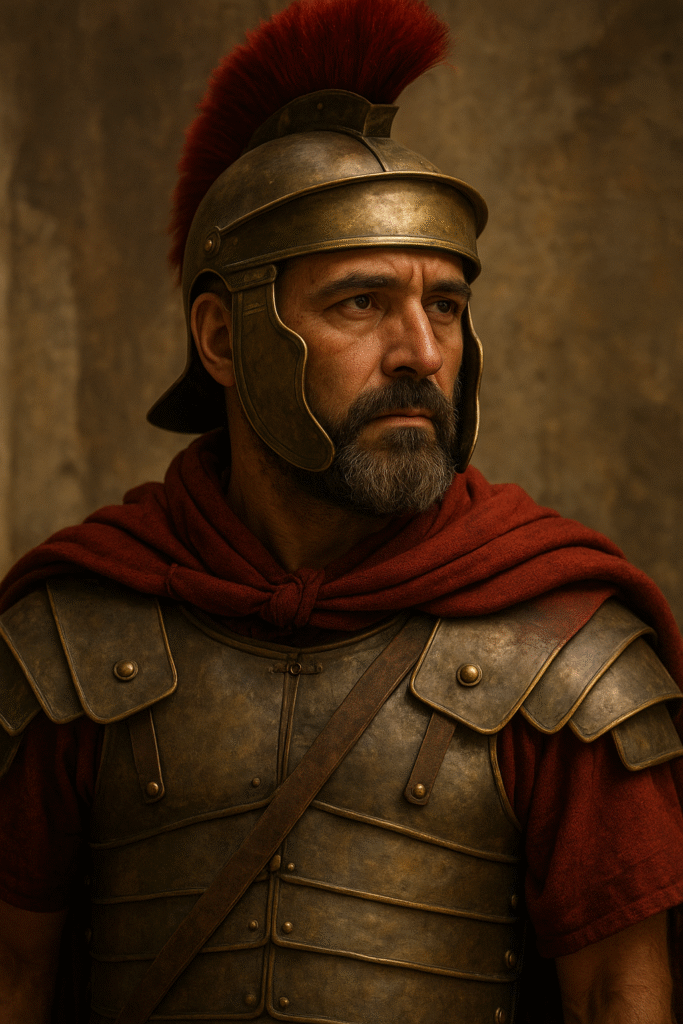
ACTS – To the Ends of the Earth: Day 10 Acts 10 — Cornelius, A Devout and God-Fearing Man Acts 10 is one of my favorite chapters in the entire Book of Acts.Maybe it is because of Cornelius, and perhaps because I bear the feminine version of his name, Cornelia. But beyond that, this chapter reveals one of the most transformative truths in Scripture. Here, God overturns generations of separation between Jews and Gentiles and reveals a single principle that still stands today.As long as a person believes and fears God, ceremonial laws and cultural divisions have no power to separate us.God accepts all who fear Him and do what is right. Cornelius: A Soldier With a Tender Heart At Caesarea there was a man named Cornelius, a centurion of what was known as the Italian Cohort, a devout man who feared God with all his household, gave alms generously to the people and prayed continually to God. (Acts 10:1–2) Cornelius was a centurion, a commander over one hundred soldiers in the Roman army. Centurions were well respected and well paid, often earning several times more than an ordinary soldier. Cornelius was wealthy and influential, yet humble and prayerful. Though a Gentile, he aligned his life with certain Jewish practices such as prayer and giving to the poor. He was not a convert to Judaism, but he had a heart for God. And God noticed. One afternoon, an angel appeared to him and said, “Your prayers and your alms have ascended as a memorial before God.” This shows that God hears and remembers sincere prayer. Cornelius’s devotion and generosity became a sweet offering before the Lord Peter’s Vision: When God Redefines What Is Clean Meanwhile, in Joppa, Peter had a vision. A large sheet came down from heaven filled with all kinds of animals, and a voice said, “Rise, Peter, kill and eat.” Peter refused, saying he had never eaten anything unclean. But the voice replied, “What God has made clean, you must not call common.” (Acts 10:15) This vision was not about food. It was about people. Peter was still holding on to old traditions that separated Jews from Gentiles. He thought he was protecting his faith by avoiding what was “unclean.” Yet God was showing him that holiness is not measured by tradition or culture but by what God declares righteous. The vision happened three times. God was preparing Peter for an assignment that would change everything. “You yourselves know how unlawful it is for a Jew to associate with or to visit anyone of another nation,” Peter said, “but God has shown me that I should not call any person common or unclean.” (Acts 10:28) Peter confessed what God had revealed to him. The gospel was never meant to be bound by race or rule. Cornelius shared how an angel had visited him, giving clear instructions to send for Peter. Then he said, “Now we are all here in the presence of God to hear all that you have been commanded by the Lord.” (Acts 10:33) Cornelius’s heart was open, ready, and expectant. He did not keep the invitation to himself. He called his family and friends so they could all hear the message together. The Message and the Miracle Peter began to preach and said, “Truly I understand that God shows no partiality, but in every nation anyone who fears Him and does what is right is acceptable to Him.” (Acts 10:34–35) While Peter was still speaking, something powerful happened. “The Holy Spirit fell on all who heard the word.” (Acts 10:44) The same Spirit that filled the disciples at Pentecost now came upon the Gentiles. They had never followed Jewish customs or traditions, yet God poured out His Spirit freely. The Jewish believers who came with Peter were amazed. The Holy Spirit had come upon people who were once considered outsiders. Peter then said, “Can anyone withhold water for baptizing these people, who have received the Holy Spirit just as we have?” (v.47) Cornelius and his entire household were baptized. Peter stayed with them for a few days, sharing meals and fellowship with people he once thought were unclean. A Shift in the Story of Redemption Acts 10 marks a divine turning point.Until now, the gospel had mainly reached Jews and Samaritans. Through Cornelius, God opened the door for all nations. The promise Jesus gave in Acts 1:8 — that the gospel would go to the ends of the earth — began to unfold through a man of prayer, generosity, and humility. God used two people, one who prayed and one who obeyed, to bridge the greatest divide in history. PrayerDear Lord,Thank You for breaking every wall that separates us.Teach me to see people through Your eyes and not through my own filters.Help me to walk in humility, obedience, and love.Make my life a living testimony that welcomes others to You.In Jesus’ name, Amen.

ACTS – To the Ends of the Earth- Day 10 Read More »

ACTS – To the Ends of the Earth: Day 9

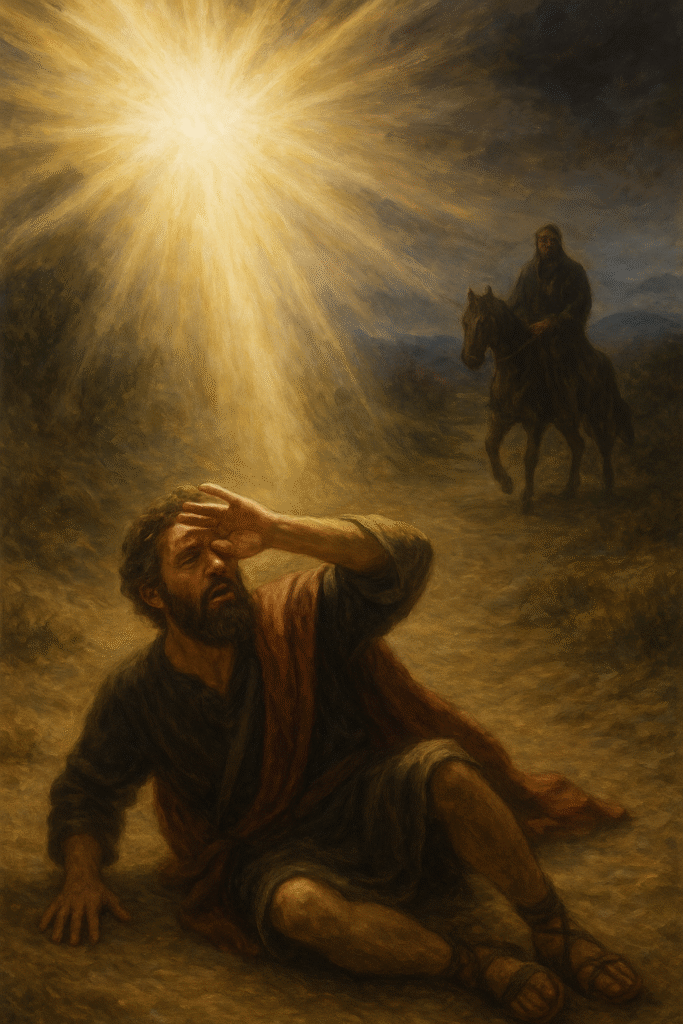
Acts 9 — Transformation and Calling Saul’s Zeal and Misguided Mission Acts 9 begins with Saul of Tarsus, a devout Greek-speaking Jew, determined to silence anyone who followed Jesus. He truly believed he was defending God’s truth. With official letters from the high priest, Saul set out for Damascus, ready to arrest Christians who belonged to “the Way.” The term “the Way” was how early Christians described their faith. It represented the path of salvation through Jesus and the way of life in relationship with God. It was not just belief, but a lifestyle patterned after Christ Himself. The Damascus Encounter As Saul journeyed toward Damascus, a light from heaven flashed around him.He fell to the ground and heard a voice say, “Saul, Saul, why are you persecuting Me?” (Acts 9:4) In that instant, Saul realized he had not been fighting a movement, but the Messiah Himself. Jesus’ words revealed His unity with His followers. To harm them was to harm Him. The brightness of that divine encounter blinded Saul. His companions stood speechless, hearing the sound but seeing no one. The same voice that struck fear also extended mercy. Saul, trembling and blind, was led by hand into Damascus, where he spent three days without sight, food, or water. Ananias: Obedience in Fear In Damascus, a disciple named Ananias heard from the Lord, “Go to the house of Judas on Straight Street and look for Saul of Tarsus.” (Acts 9:11) Ananias hesitated, for Saul’s reputation was known far and wide. Yet God’s instructions were clear. He went, laid his hands on Saul, and said, “Brother Saul, the Lord Jesus who appeared to you on the road has sent me that you may regain your sight and be filled with the Holy Spirit.” Immediately, something like scales fell from Saul’s eyes. He regained his sight, was baptized, and strengthened. The persecutor was now a preacher. The very one who dragged believers from their homes would soon risk everything to proclaim Christ in those same homes. From Blindness to Boldness Saul began proclaiming Jesus in the synagogues of Damascus, declaring, “He is the Son of God.” (Acts 9:20) The same fire that once fueled persecution was now burning for purpose. Many were astonished at the change, and others plotted to kill him. Yet even in the face of danger, Saul pressed forward, already walking in his divine assignment. The Church, which had been scattered by persecution, now entered a season of peace. “So the church throughout all Judea and Galilee and Samaria had peace and was built up. And walking in the fear of the Lord and in the comfort of the Holy Spirit, it multiplied.” (v.31) Peace did not mean the absence of trials. It meant that the presence of the Holy Spirit outweighed  Peter’s Ministry in Lydda and Joppa As Saul’s ministry was taking root, Peter was still moving through the regions where believers gathered. At Lydda, he met a man named Aeneas, paralyzed for eight years. Peter said to him, “Jesus Christ heals you. Rise and make your bed.” (v.34) Instantly, Aeneas rose, and the miracle led many in the region of Sharon to turn to the Lord. God’s power continued to affirm the message of salvation. From Lydda, Peter was called urgently to Joppa, a coastal city known for trade and cultural diversity. Something tragic had happened there. Dorcas Restored to Life “Now there was in Joppa a disciple named Tabitha, which, translated, means Dorcas. She was full of good works and acts of charity.” (v.36) Dorcas was known for her kindness and her skill. She sewed garments for widows and the poor, using her gifts to serve God’s people. Her name meant “gazelle,” symbolic of grace and beauty, which reflected her spirit. But tragedy struck. Dorcas became sick and died. The community was devastated. The widows who loved her washed her body and laid her in an upper room. Hearing that Peter was nearby in Lydda, they sent for him urgently. When Peter arrived, he was taken to the room where Dorcas lay. The widows wept and showed him the garments she had made. It was not just fabric they displayed, but evidence of a life poured out for others. Then Peter did something deeply familiar. “He put them all outside and knelt down and prayed. And turning to the body he said, ‘Tabitha, arise.’ And she opened her eyes, and when she saw Peter she sat up.” (v.40) This mirrors what Jesus did when He raised Jairus’ daughter in Mark 5:37–41.Jesus had sent everyone out of the room except Peter, James, and John. He removed the noise of doubt and despair so faith could fill the space. Peter, having witnessed that moment years earlier, now followed the same pattern. He cleared the room, knelt, and prayed. Then, just as his Master once spoke to the dead, Peter spoke life into Dorcas. When Dorcas opened her eyes, Peter helped her to her feet and presented her alive to the believers. Word spread throughout Joppa, and many came to believe in the Lord. Joppa, known today as Jaffa, was an important port city along the Mediterranean coast, just south of modern-day Tel Aviv. It was a hub for travelers and traders from across regions, making it a strategic place for the gospel to spread beyond Jewish borders. Peter’s act in Joppa prepared the way for what would happen next in Acts 10 — the opening of the gospel to the Gentiles. His stay at the house of Simon the tanner (v.43), a man involved in working with animal hides, signaled a growing shift away from Jewish ritual restrictions toward a new covenant of grace for all people. PrayerLord Jesus,Thank You for calling the unworthy and transforming the unlikely.Teach me to walk humbly like Ananias, to serve faithfully like Dorcas, and to obey courageously like Peter.When I face death in my dreams or faith, speak life again through Your Spirit.Let my hands and heart be instruments of

ACTS – To the Ends of the Earth: Day 9 Read More »

Review Your Cart
0
Add Coupon Code
Subtotal