November 2025

Acts- To the Ends of the Earth- Day 28

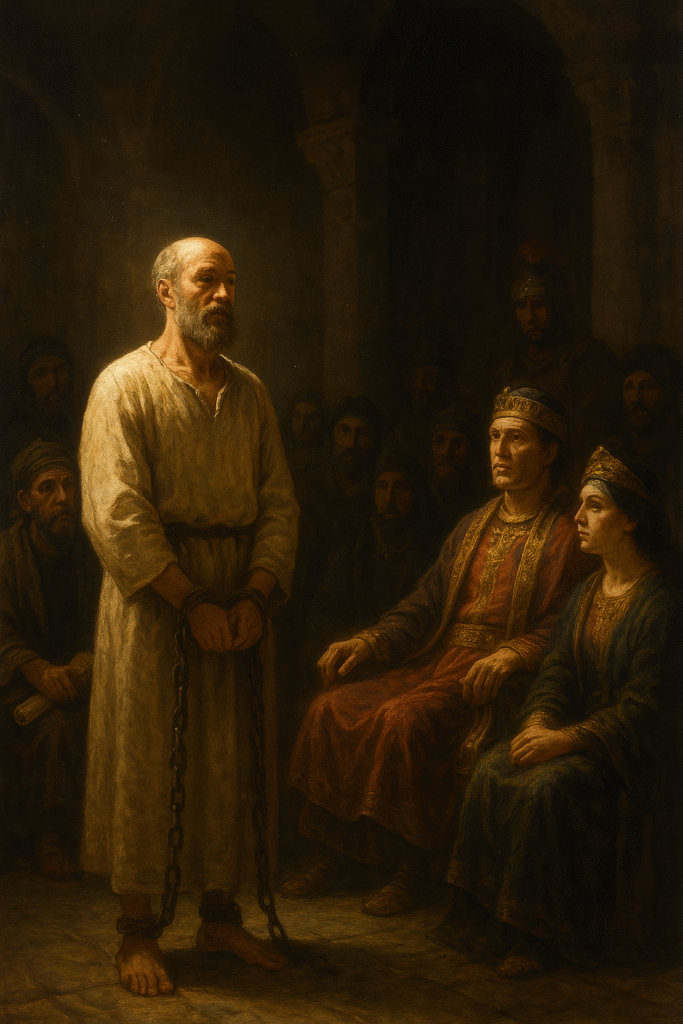
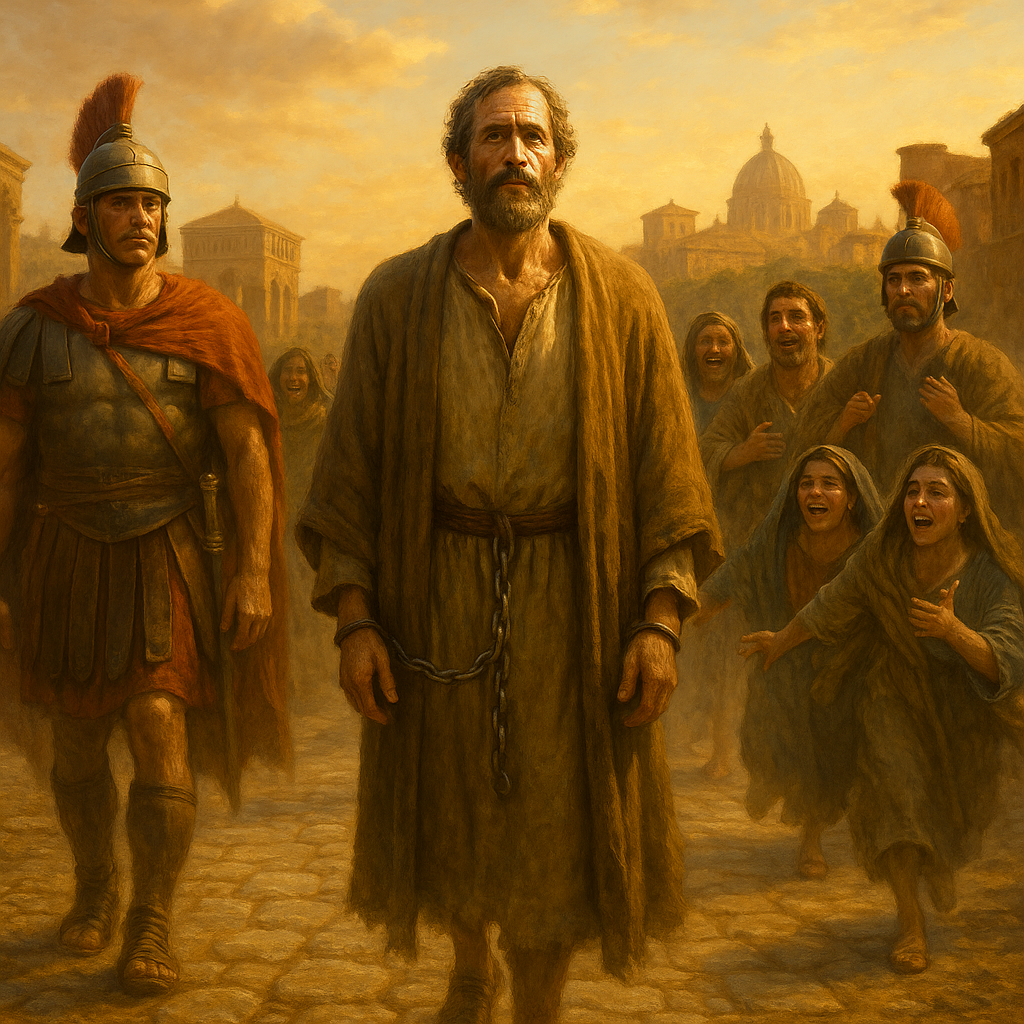
Acts 28- To the Ends of Rome We have reached the last chapter of Acts, and what a journey it has been. From Jerusalem to Judea, Samaria, and finally to the ends of the earth, we have watched the gospel leap over borders, cultures, storms, prisons, and human resistance. And now, in Acts 28, we watch Paul arrive exactly where God said he would,  Rome , even though everything around him seemed determined to stop him. Shipwreck Survivors and Island Grace After barely surviving the storm of Acts 27, Paul and the other 275 passengers wash ashore on Malta. Luke says, “The native people showed us unusual kindness” (Acts 28:2).Isn’t it beautiful that after a season of violent storms, God often lets us land in a place of kindness? Things escalate when a viper fastens onto Paul’s hand. The locals assume justice has caught up with him, but when Paul shakes the snake off and remains unharmed, they switch their opinion and think he is divine (Acts 28:4–6).Of course, Paul isn’t divine. But the God he belongs to is. This becomes even more evident when Paul prays for Publius’s sick father, “and healed him” (Acts 28:8). Soon, the whole island begins bringing their sick to him. Malta becomes a place of healing — a reminder that even detours are divine appointments. On to Rome — Just as God Said After three months, Paul boards another Alexandrian grain ship marked with the symbols of Castor and Pollux, twin gods who supposedly protected sailors. How ironic — the real protection on that vessel was the presence of a man carrying God’s word. They stop at Syracuse, Rhegium, and then reach Puteoli, where Paul finds believers — proof again that the gospel had run ahead of him (Acts 28:14). When Christians from Rome travel miles to meet him at the Forum of Appius and Three Taverns, Luke writes tenderly, “On seeing them, Paul thanked God and took courage” (Acts 28:15).Even the strongest leaders need the ministry of presence. Community matters. Encouragement matters. People matter. Paul’s Final Ministry Moves Paul is allowed to stay in his own rented home under guard — a privilege showing both Roman respect for him and the kindness of believers (Acts 28:16). His first meeting is with the Jewish leaders. He explains why he’s in Rome and assures them he is not their enemy. He testifies to “the hope of Israel” ; the Messiah,  proven through the resurrection (Acts 28:20). They schedule a day to hear him, and here we see Paul doing what he has done in every city for decades: “From morning till evening he expounded to them… trying to convince them about Jesus both from the Law of Moses and from the Prophets.”— Acts 28:23 Some believed. Others refused.This has been the rhythm of Acts,  the gospel advances, even through resistance. Paul quotes Isaiah 6:9–10 to explain their hardness of heart, then announces the news that has shaped church history ever since: “This salvation of God has been sent to the Gentiles; they will listen.”— Acts 28:28 And with that, Luke closes the book: “Paul lived there two whole years… proclaiming the kingdom of God and teaching about the Lord Jesus Christ with all boldness and without hindrance.”— Acts 28:30–31 Without hindrance.Though in chains, Paul’s message ran free. And for nearly two thousand years, it still has.   Acts began with a handful of disciples in an upper room. It ends with the gospel being preached in the empire’s capital. Nothing — not storms, snakes, courts, mobs, prisons, or chains — could hinder the plan of God. Acts ends, but the story doesn’t.We are the ongoing chapters.We carry the same Spirit.We proclaim the same Christ.We walk in the same boldness.We serve the same unstoppable God. PrayerFather, thank You for bringing us through the entire book of Acts. Thank You for showing us Your power, Your providence, Your faithfulness, and Your heart for all people. As Paul reached Rome by Your sovereign hand, help us reach the places You have appointed for us. Give us courage in storms, compassion in ministry, and boldness in witness. Let our lives reflect the same fire of the early Church. Make us living testimonies that the gospel cannot be chained. In Jesus’ name, Amen.  

Acts- To the Ends of the Earth- Day 28 Read More »
Acts- To the Ends of the Earth- Day 27

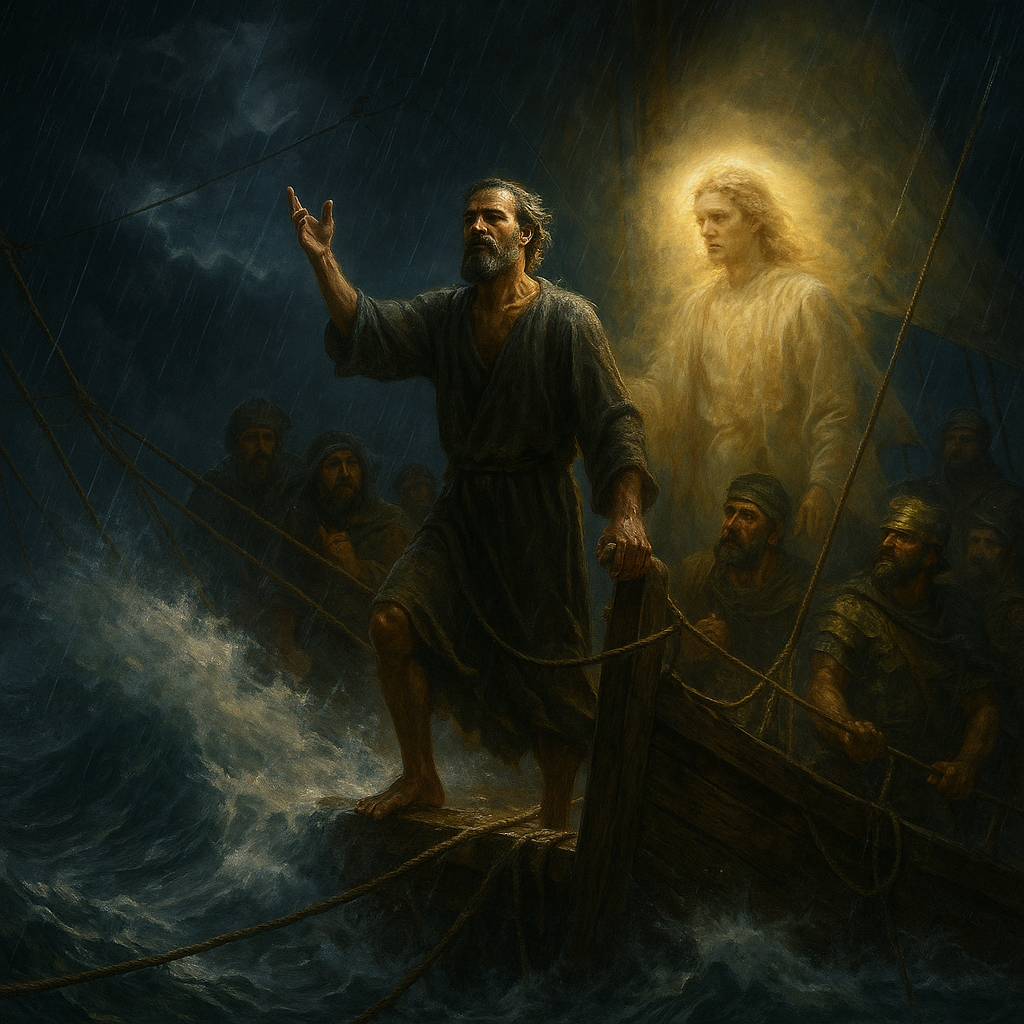
ACTS 27- Shipwreck Acts 27 reads like a movie script full of wind, waves, darkness, and divine intervention. Yet beneath all the drama is a simple truth: God keeps His word, even when everything around us is falling apart. Luke gives us such rich detail that you can almost feel the salt water on your face. He writes using “we” again (Acts 27:1), reminding us he was right there beside Paul on this journey to Rome. Paul wasn’t alone. Even in chains, he had companions and favour. A Voyage Marked by God’s Providence Paul is placed under the care of Julius, a Roman centurion. Surprisingly, Julius shows him kindness, allowing him to meet believers in Sidon (Acts 27:3). Even in custody, God makes room for Paul’s spiritual refreshment. From there, the journey becomes a slow struggle against nature. They travel “under the shelter” of islands (Acts 27:4), pushed and tossed by unpredictable winds. By the time they reach the south side of Crete, it’s clear the season is against them. Luke reminds us that “the Fast” (the Day of Atonement) had passed (Acts 27:9), signaling the arrival of dangerous autumn storms. Paul warns them not to continue: “Men, I perceive that the voyage will be with injury and much loss” (Acts 27:10). They don’t listen. The pilot and shipowner trusted their expertise over God’s messenger. How often do we do the same? When the Storm Finds You Soon enough, the northeaster—a violent storm—hits them (Acts 27:14). They lose control of the ship. They throw cargo overboard. They even throw out the ship’s tackle (Acts 27:18–19). Luke writes with heartbreaking honesty: “All hope of our being saved was at last abandoned.”(Acts 27:20) Can you imagine the despair? Days without sun. Nights without stars. No sense of direction. No professional skill left to rely on. Sometimes God allows all the earthly anchors to fail so we learn who the true Anchor is. A Word from the God Who Stands in Every Storm Into the chaos, Paul stands and speaks with divine confidence: “You should have listened to me… Yet now I urge you to take heart.”(Acts 27:21–22) Then he shares a revelation: “For there stood by me this night an angel of the God to whom I belong and whom I worship.”(Acts 27:23) What a statement.Paul doesn’t just serve God.He belongs to God. The angel’s message is simple: Paul must stand before Caesar, and because he is on that ship, everyone else will survive (Acts 27:24). The presence of one faithful believer preserved 275 other lives. This is the power of intercession.This is the weight of calling.This is what it means to carry God’s favour. Paul declares, “I have faith in God that it will be exactly as I have been told.” (Acts 27:25) Not approximately.Not hopefully.Exactly. Courage in Community As morning approaches, the sailors secretly try to escape in the lifeboat. Paul exposes their plan and warns the centurion, who immediately acts (Acts 27:30–32). Once again, Paul’s spiritual clarity saves lives. Then Paul encourages everyone to eat. After two weeks of fear and exhaustion, he takes bread, gives thanks to God in front of everyone, and breaks it (Acts 27:35). It’s not communion, but it feels like one—a moment where heaven touches chaos with peace. And then, at last, dawn comes.They see land.The ship breaks apart on a reef, but every single person makes it safely to shore, just as God promised (Acts 27:44). The God Who Governs Storms Acts 27 reminds us that: • God is not intimidated by storms• His purpose does not bow to chaos• His promises are not fragile• And His presence is the safest place on earth—even when everything is sinking Paul never piloted the ship… but spiritually, he was the steady captain all along. Anchored in God, he guided everyone safely through. May we be such women—steady, faithful, and anchored in Christ when storms rage. Acts 27 is a dramatic portrait of God’s faithfulness in crisis. Paul, though a prisoner, becomes the spiritual leader on board. A violent storm threatens all their lives, but God reassures Paul that he must reach Rome and that everyone with him will be saved. Through divine revelation, prayer, practical wisdom, and courage, Paul guides the entire ship safely to land. The chapter teaches us to trust God’s word in storms, listen for His voice, and stand firm in faith even when the world is falling apart. PrayerFather, thank You for being the Anchor in every storm. Teach us to trust You when the winds rise and the waves roar. Give us the courage of Paul—faith that does not bend, hope that does not fade, and resolve that stands on Your word. May our presence bring safety and peace to others. Remind us that we belong to You, and because of that, we are never lost, never abandoned, and never without purpose. Guide us through every storm toward the destiny You have prepared. In Jesus’ name, Amen.

Acts- To the Ends of the Earth- Day 27 Read More »

ACTS- To the Ends of the Earth- Day 26

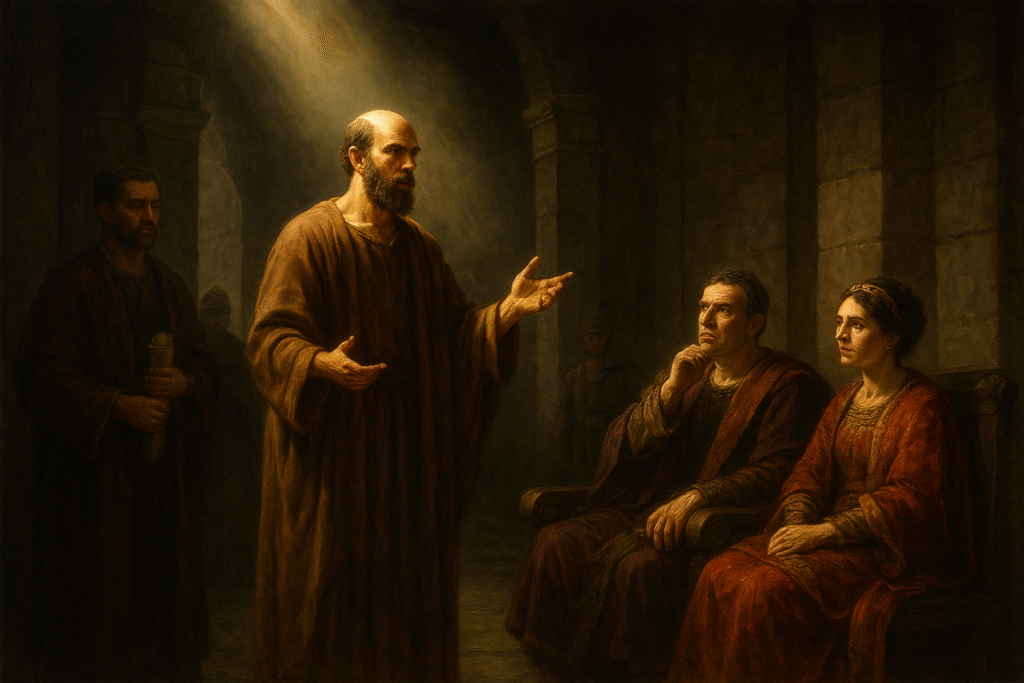
Acts 26- Vindication By the time we step into Acts 25–26, Paul has been held in Caesarea for over two years. Two years of waiting. Two years of uncertainty. Two years of knowing he had done nothing wrong and yet remaining behind Roman walls. And yet, Paul never lost the sense that even delayed seasons are divine assignments. God hadn’t paused Paul’s ministry. He had simply relocated it. While in Caesarea, Paul was brought before three powerful figures: Governor Felix, Governor Festus, and King Agrippa II. Each hearing was an opportunity to witness. And in every room, Paul stepped in with a calm confidence that only the Holy Spirit can give. Festus, the newly appointed governor, wanted to send Paul back to Jerusalem for trial, something that would have meant certain death (Acts 25:3). But Paul knew the Lord’s plan for him: Rome. So he exercised his right as a Roman citizen and appealed to Caesar (v. 11). This move not only protected his life but ensured the gospel would reach the highest levels of the empire. Enter King Agrippa II, a man well-versed in Jewish law and prophecy. Paul’s defense before Agrippa is the longest and most detailed explanation of his conversion and the gospel in the entire Book of Acts (chapters 25–26). And Paul, as always, doesn’t sensationalize anything. He simply tells the truth of what Jesus did in him. He shares how, on the road to Damascus, he heard Jesus say, “Saul, Saul, why are you persecuting Me? It is hard for you to kick against the goads.” (Acts 26:14). That phrase “kicking against the goads” was like saying, “You’re fighting the very God who is trying to lead you.” It’s a reminder that none of us outrun or outfight the grace of God. When He is after you, He will find you. Paul goes on to explain that Jesus not only saved him, but commissioned him:“…to open their eyes so that they may turn from darkness to light and from the power of Satan to God.” (Acts 26:18) This is why Paul remained unwavering, even in chains. He knew his calling. He knew his purpose. He knew Who he belonged to. And he reminds Agrippa and all of us that the gospel fulfills everything the prophets declared (vv. 22–23). The suffering of Jesus, His resurrection, and the call to repentance were not new ideas. They were the fulfillment of God’s ancient plan. When Paul boldly asked Agrippa, “Do you believe the prophets? I know that you believe,” Agrippa tried to deflect:“In a short time would you persuade me to be a Christian?” (v. 28) But Paul, undeterred, replied with one of the most beautiful statements in Scripture:“Whether short or long…I wish that all might become as I am—except for these chains.” (v. 29) Paul didn’t want Agrippa’s political power, his palace, or his influence. He wanted Agrippa’s soul. He wanted him to know the joy, forgiveness, and freedom found in Christ. And that is the heart of every true disciple: that others experience Jesus chains or no chains. Even after the hearing, Agrippa declared that Paul was innocent (26:31–32). But because he had appealed to Caesar, he would go to Rome just as the Lord had said. What looked like injustice was actually divine positioning. Acts 25–26 shows us that God wastes nothing, not delays, not trials, not injustice, and certainly not waiting seasons. Paul stood before governors and kings not as a victim but as a witness. His testimony reminds us that no earthly authority can derail God’s heavenly plan. And like Paul, we are called to share the light of Christ with boldness, clarity, and compassion even when our own story includes pain. PrayerLord, thank You for Paul’s courage and the reminder that Your purpose prevails in every season, even the ones that feel slow or unfair. Give us the boldness to speak Your truth with grace. Help us to trust Your timing and to see every room we enter—whether small or influential—as a mission field. Strengthen our hearts so that, like Paul, we can say, “Whether short or long,” we desire that all might come to know You. Anchor us in Your will and steady us by Your Spirit. In Jesus’ name, amen.

ACTS- To the Ends of the Earth- Day 26 Read More »

Acts- To the Ends of the Earth- Day 25

Acts 25- God Behind the Scenes Acts 25 opens like a reminder that sometimes the fiercest opposition we face doesn’t come from strangers but from people who should have understood us. Paul had barely arrived in Caesarea under Roman protection when the chief priests and leading Jewish men—the Sanhedrin—were already plotting against him again (Acts 25:2). These were men who carried authority, influence, and religious weight. Yet even with all their power, they couldn’t override the quiet, sovereign hand of God working behind the scenes. Festus was a new governor, still learning the ropes, still trying to earn Rome’s approval and keep peace with the Jewish authorities. But without even meaning to, he became part of God’s protective shield around Paul. Festus insisted that if the Jews wanted a hearing, they had to come to him, in Caesarea (Acts 25:4). He didn’t know it, but God was using him to block an assassination attempt. It’s comforting to remember that sometimes, God uses people who aren’t even aware of Him to accomplish His purposes in our lives. Protection doesn’t always look supernatural; often, it looks administrative, procedural, or “inconvenient” to your enemy. Paul Refuses to Be Cornered When Festus later suggested Paul return to Jerusalem for trial, Paul immediately knew what time it was. The Scripture is clear: “wishing to do the Jews a favor” (Acts 25:9), Festus was leaning toward compromise. And compromise would have cost Paul his life. So Paul did what only a Roman citizen could do: he appealed to Caesar (Acts 25:11). By invoking this legal right, he took the entire case out of Festus’s hands. This wasn’t Paul being dramatic—it was Paul being discerning. He realized that even though Festus wasn’t malicious, he was politically vulnerable. And vulnerable authority is often dangerous authority. Appealing to Caesar wasn’t just a smart legal move. It was a prophetic fulfillment. Back in Acts 9, Jesus told Paul he would testify before kings. Now, layer by layer, the plan was unfolding. Enter King Agrippa and Bernice As if the story needed more royal drama, King Agrippa II and his sister Bernice arrived to pay Festus a courtesy visit (Acts 25:13). Agrippa was no small figure. He oversaw the temple, appointed high priests, and knew Jewish customs better than the average Roman. Festus, confused about the whole situation, explained Paul’s case. He admitted something revealing: “They brought no charge of such evils as I supposed” (Acts 25:18). In other words:“I thought this man was dangerous, but this is just a religious disagreement I don’t understand.” Festus understood Roman law. He didn’t understand resurrection, prophecy, or the passion of the Sanhedrin. But he did know he had no grounds to convict Paul. And again—we see God quietly guarding Paul’s destiny through political confusion and legal uncertainty. The Stage Is Set When Agrippa agreed to hear Paul speak, the scene was almost cinematic. Tomorrow’s chapter—Paul before Agrippa—will give us one of the most powerful gospel presentations in the book of Acts. But Acts 25 teaches us something else: God can secure your future using the very systems built to destroy you. God used: Festus’s administrative fairness Rome’s legal right of appeal Agrippa’s curiosity The Sanhedrin’s inability to agree And Paul’s own Roman citizenship All to move Paul exactly where God wanted him: toward Rome, toward Caesar, toward purpose. Nothing is wasted in God’s hands. Acts 25 reminds us that God is always working behind the scenes, even through government decisions, legal rights, and the actions of people who don’t even know Him. Paul faced fierce opposition, but each attempt against him only pushed him closer to the path God had ordained. When human agendas collide with divine purpose, God’s plan always wins. PrayerLord, thank You for being the God who protects us even when we don’t see it happening. Help us trust Your unseen hand when circumstances feel unstable or when people oppose what You’ve called us to do. Give us Paul’s courage, discernment, and clarity to walk in wisdom and boldness. And may every attempt to derail Your purpose only propel us closer to our calling. In Jesus’ name, Amen.

Acts- To the Ends of the Earth- Day 25 Read More »

Acts-To the Ends of the Earth- Day 24

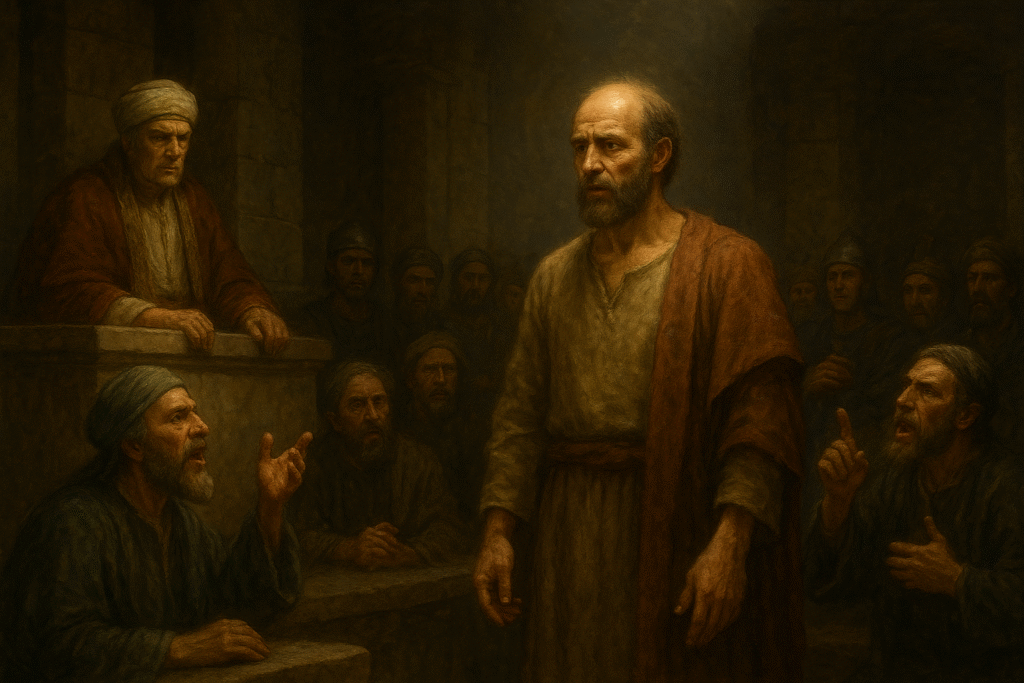
Acts 24- Faith on Trial Acts 24 opens with Paul standing before Felix, the Roman governor, while the Jewish leaders from Jerusalem bring their accusations. It is one of the closest things Paul ever got to a formal trial. And honestly, the whole thing feels like watching a calm, steady flame surrounded by howling winds; the winds blow hard, but they never put the flame out. False Accusations and Flattery The high priest Ananias arrives with his hired spokesman Tertullus — basically a polished lawyer trained to impress Roman officials. He starts with over-the-top flattery, praising Felix for “peace” and “reforms.” Historically, Felix was known for the exact opposite. His rule was marked by corruption and chaos. But flattery was a tactic to soften the governor and get a conviction. Tertullus accuses Paul of three things (Acts 24:5–6): Causing riots Leading the Christians Defiling the temple Paul later denies two, and openly admits to the second one — because belonging to “the Way” (Acts 24:14) wasn’t a crime. It was the fulfillment of God’s promises. Paul’s Simple, Steady Defense When Paul speaks, he avoids flattery and simply tells the truth. He reminds Felix that he had only been in Jerusalem twelve days — hardly enough time to stir up a rebellion (Acts 24:11–12). He also makes a vital confession: he worships the God of the fathers, believes everything written in the Law and the Prophets, and holds firmly to the resurrection of both “the just and the unjust” (Acts 24:14–15). Paul does something beautiful here, instead of distancing himself from his Jewish heritage, he roots himself in it. He is saying, “My faith in Jesus is not new. It is the continuation of everything God has always promised.” The Missing Witnesses Paul is smart. He brings up the fact that the Jews from Asia — the ones who actually caused the uproar in the temple (Acts 21:27) — aren’t even present. Roman law required accusers to face the accused. Their absence spoke volumes (Acts 24:18–19). Felix: Curious but Corrupt Felix actually knew a lot about the Way (Acts 24:22). His wife Drusilla was Jewish royalty — daughter of Herod Agrippa I, sister of Agrippa II — so he likely heard plenty about Jesus and the early church. Paul shares the gospel with the couple privately, speaking about righteousness, self-control, and the coming judgment (Acts 24:25). Felix becomes visibly uncomfortable — Scripture says he was afraid — and sends Paul away. There’s a striking moment of conviction… but Felix doesn’t follow through. And then we learn the real reason he kept calling Paul back: he was hoping for a bribe (Acts 24:26). Felix had knowledge of the truth but never surrendered to it. Paul had none of the power, none of the position, and yet he was the free one. Two Years of Waiting Felix keeps Paul in custody for two years, partly to please the Jews (Acts 24:27), partly because he hoped to profit from Paul’s imprisonment. It is a reminder that: God’s timeline is not our timeline Being in the right doesn’t guarantee immediate relief Sometimes God keeps us in quiet seasons to refine us Paul’s ministry didn’t stop. His boldness didn’t shrink. His faith didn’t falter. Even unjust confinement becomes a stage for the gospel. Acts 24 shows us that truth doesn’t need embellishment; it stands on its own. Paul meets false accusations with honesty, hostility with calm resolve, and corruption with integrity. Felix hears the gospel but chooses convenience over conviction. Paul, even in chains, proves more spiritually free than the man sitting in the governor’s chair. This chapter reminds us that God’s purposes continue even when we feel sidelined, unheard, or unfairly treated. Faithfulness in the waiting seasons matters. God sees it all.   PrayerFather, thank You for the courage and steadiness You gave Paul. When we find ourselves misunderstood or misrepresented, help us respond with integrity and peace. Strengthen us to hold firmly to Your truth, even when others twist it. Give us discernment to recognize moments of conviction and the boldness to follow through. Teach us to trust Your timing and Your justice, even when our circumstances feel unfair. May our lives reflect the same unwavering faith Paul displayed, knowing that You are always at work. Amen.

Acts-To the Ends of the Earth- Day 24 Read More »

ACTS- To the Ends of the Earth- Day 23

Acts 23- Courage in Chaos Acts 23 is one of those chapters where you can feel the tension rising like a storm cloud… yet you also see the sovereignty of God shining through every dark corner. Paul is now standing before the Sanhedrin — the religious council of Israel — and everything about this moment tells us it could go terribly wrong. But God has already gone ahead of him. Paul begins by explaining that he has lived his life with a clear conscience before God. Before he can even finish, the high priest Ananias commands someone to strike Paul on the mouth (Acts 23:2). This wasn’t just rude — it was illegal (Lev. 19:15). No wonder Paul responds, “God will strike you, you whitewashed wall!” (Acts 23:3). Like Jesus in Matthew 23:27, Paul uses “whitewashed” to describe hypocrisy — something beautiful on the outside but rotten underneath. And honestly, Ananias fits that description perfectly in history. He was known for greed, corruption, and brutality. But then, something so humbling happens. When Paul is told the man he rebuked is actually the high priest, he immediately softens:“I did not know, brothers, that he was the high priest” (Acts 23:5).Whether it was because Paul had poor eyesight (see Galatians 4:15) or simply didn’t recognize someone he hadn’t seen in many years — it shows his heart. He wasn’t lashing out from the flesh. His intention was truth, not disrespect. Once Paul realizes the room is divided between Pharisees and Sadducees, he speaks with wisdom:“It is with respect to the hope and the resurrection of the dead that I am on trial.”Instantly, chaos erupts. The Sadducees deny any resurrection (Acts 23:8) and the Pharisees affirm it — so suddenly Paul is no longer the enemy. They actually stand up and defend him! It was brilliant, but it also shows us something deeper: Paul understood the people in front of him, and he understood the moment. But here’s my favorite part of the entire chapter — what happens after the riot.Paul is sitting alone in the barracks, probably exhausted, bruised, discouraged, and wondering, “Did I even do the right thing?”And then — Jesus comes to him.Not an angel.Not a dream.Jesus Himself stands beside him. And He says the words every weary servant longs to hear:“Take courage…” (Acts 23:11)“Just as you testified about Me in Jerusalem, so you must also testify in Rome.” Beloved, this is the heart of Acts 23:Jesus shows up in the middle of chaos and reassures His servant that the mission isn’t over. The next morning, more than 40 men swear an oath — a death pact — that they will not eat or drink until they kill Paul (Acts 23:12). Can you imagine? That level of hatred? But God already has the provision in place. Paul’s nephew overhears the plot and reports it (Acts 23:16). We didn’t even know Paul had a nephew — God had a hidden helper the whole time. The Roman commander responds with shockingly high-level protection:470 Roman soldiers escort Paul out of Jerusalem under cover of night (Acts 23:23–24).This is not “barely surviving.”This is God turning Paul — a prisoner — into the most protected man in the region. And when Paul arrives in Caesarea, Governor Felix receives him and orders him to be kept in Herod’s palace (Acts 23:35). Imagine that — God’s servant kept safe in a governor’s royal residence while awaiting what comes next. Acts 23 reminds us: You can be surrounded by enemies and still be right in the center of God’s will. Acts 23 shows us a Paul who is courageous, discerning, and deeply human — navigating conflict, danger, and injustice. Yet through every moment, God is weaving protection around him. Even when people plotted to kill him, God used unexpected people — a nephew, a Roman commander, hundreds of soldiers — to carry Paul safely into the next stage of his assignment. This chapter whispers to us:Your calling may be costly, but God never leaves you alone in it.If Jesus stood by Paul in the barracks, He will stand by you in your season too.   PrayerLord Jesus, thank You for being the God who stands beside us in every storm. Strengthen our hearts the way You strengthened Paul. Give us courage when the road is hard and wisdom when the moment requires clarity. Help us trust You when opposition rises, knowing You are already ahead of us, orchestrating provision in ways we cannot see. Keep our consciences clean, our hearts soft, and our devotion firm. Lead us with Your presence, and make us faithful in every season, just as Paul was. Amen.

ACTS- To the Ends of the Earth- Day 23 Read More »

Acts- To the End of the Earth- Day 22

Acts 22- Tell your Story Acts 22 is Paul’s powerful reminder that sometimes your testimony is your greatest sermon. After surviving the riot in Jerusalem, Paul asks for permission to speak — not to defend himself, but to share Christ. And incredibly, the same crowd that tried to kill him suddenly grows silent the moment he begins speaking in Hebrew (Acts 22:2). God will often give you unexpected favor when you step into obedience. Paul’s Roots and His Zeal Paul begins by establishing common ground with his Jewish audience. He reminds them: He was “brought up in this city” — Jerusalem (v. 3) Trained under Gamaliel, one of the most respected rabbis (v. 3) Zealous for the Law, just as they were (v. 3) He even admitted that he persecuted the Way (the early Christians), dragging men and women to prison (v. 4; cf. Acts 8:3; 9:1). Paul wasn’t a casual unbeliever — he was passionately wrong. Yet God still chose him. That alone is encouragement: your past can’t disqualify you from God’s purpose. A God Who Interrupts Then Paul recounts the moment grace intercepted him on the road to Damascus. A blinding light. A voice calling his name. “I am Jesus” (Acts 22:8). Some heard the sound but didn’t understand the voice (v. 9). Not everybody will understand what God speaks to you — and that’s okay. Ananias enters the story next. Paul highlights Ananias as “a devout man according to the law” (v. 12), again building credibility with his audience. This man, faithful and respected, laid hands on Paul and spoke God’s calling over him: “The God of our fathers appointed you to know His will, to see the Righteous One, and to hear a voice from His mouth.” (Acts 22:14) Then came the invitation: “Rise and be baptized, and wash away your sins, calling on His name” (v. 16). Baptism didn’t save Paul; Jesus did. But baptism demonstrated outwardly what God had done inwardly — cleansing through Christ’s blood (Heb. 10:19–22). A Vision in the Temple Paul describes another encounter with Jesus — this time in the temple (Acts 22:17). This is important. He is grounding his experience in sacred Jewish space, much like Isaiah’s call (Isa. 6). In that moment Jesus told him plainly: leave Jerusalem, because they will not accept your testimony (v. 18). That had to hurt. Paul longed for his own people to believe. But God was writing a bigger story: “I will send you far away to the Gentiles.” (Acts 22:21) Sometimes God closes the door you want most so He can open the door He needs most. Citizenship and Divine Protection The moment Paul mentioned the Gentiles, the crowd exploded again (v. 22). The Romans stepped in to interrogate him by scourging — until Paul quietly mentioned that he was a Roman citizen (v. 25–29). Instantly everything changed. Isn’t it interesting?God used both Paul’s supernatural encounters and his natural citizenship to protect him. God will use anything — spiritual or practical — to keep His purpose intact. The Lesson of Acts 22 Paul teaches us that our testimony has power — but obedience has even more. He also shows us that: You can be misunderstood and still be obedient God may send you where you never planned to go Your past doesn’t cancel your calling Your story will always point back to Jesus, not you Paul wasn’t trying to win an argument. He was trying to win hearts. And even though the crowd rejected him, he fulfilled his assignment: he told his story anyway. Acts 22 reminds us that God uses our testimony as a bridge for the gospel. Paul speaks boldly to his own people, sharing his past, his encounter with Jesus, and his divine commissioning. Even though rejection follows, Paul remains anchored in obedience. His story teaches us that God redeems our past, directs our steps, and equips us with both spiritual and practical tools to fulfill our purpose. PrayerLord Jesus, thank You for the power of a redeemed story. Give me the courage to share what You’ve done in my life, even when I feel misunderstood or afraid. Help me walk in obedience, trust Your direction, and embrace every door You open — and every door You close. Like Paul, may I finish my race with faithfulness, boldness, and grace. Amen.

Acts- To the End of the Earth- Day 22 Read More »

Acts- To the Ends of the Earth- Day 20

ACTS 20- The Beginning of the End As Paul’s ministry in Ephesus was coming to a close, so much was happening behind the scenes that shaped this next chapter. Before he even left, he had already endured a painful visit to Corinth and written what he himself called a “tearful letter” (2 Cor. 2:4). Ministry was not glamorous for him. It was gritty, emotional, and filled with relational tension,  yet also saturated with love. When he finally left Ephesus, Paul traveled north through Macedonia, encouraging the Christians in each city along the way. He met up with Titus, who brought him the good news that the Corinthian church had repented of their earlier opposition (2 Cor. 7:5–16). This was such a relief that Paul wrote 2 Corinthians in response. Then he reached Corinth and stayed three months, likely through the winter, and while there he wrote the book of Romans (Rom. 15:22–29). What a season. Paul was writing, traveling, reconciling relationships, planting seeds, overseeing finances for the Jerusalem offering, and preparing for suffering all at the same time. A Team for the Journey Acts 20:4 lists the group of men who traveled with Paul — representatives from the churches who were entrusted with delivering the financial gift to Jerusalem. Their presence protected the integrity of the offering and showed unity across the early church. It also speaks to Paul’s own integrity. He handled money with transparency, accountability, and wisdom. These men went on ahead to Troas while Paul and Luke stayed back in Philippi, then reunited with them in Troas, where we get our first glimpse of Christians worshiping on “the first day of the week” (Acts 20:7). Sunday worship had begun. Paul’s Farewell at Miletus When Paul arrived at Miletus, he sent for the elders from Ephesus. What follows in Acts 20:17–35 is the only long speech in Acts given to Christians  and it is breathtaking. Paul reminded them how he lived among them with humility, tears, and perseverance in trials (v. 19). He said plainly, “I did not shrink from declaring to you anything that was profitable” (v. 20). He held nothing back  no truth, no correction, no encouragement, no doctrine. Then he explained what the Holy Spirit had told him repeatedly: that imprisonment and afflictions were waiting for him in Jerusalem (vv. 22–23). Every city, every prophet, every impression from the Spirit confirmed it. Yet his response was simple: “I do not account my life of any value nor as precious to myself, if only I may finish my course and the ministry I received from the Lord Jesus.” (Acts 20:24) This is one of the most beautiful statements of surrender in all of Scripture. Paul goes on to say he is “innocent of the blood of all,” because he did not fail to preach “the whole counsel of God” (vv. 26–27). Then he warned the elders with prophetic clarity. He said that “fierce wolves” would come, even from among their own leadership (vv. 29–30). Years later, Paul’s letters to Timothy confirm that this indeed happened (1 Tim. 4:1–3; 2 Tim. 2:17–18). Paul reminded them that for three years he admonished them with tears (v. 31). His ministry wasn’t cold or distant, it was emotional, pastoral, and deeply invested. He then committed them to God and to “the word of his grace” (v. 32). He closed by reminding them of something Jesus said that is not recorded in the Gospels: “It is more blessed to give than to receive.” (Acts 20:35) Finally, they knelt together and prayed. The elders wept, embraced Paul, and kissed him. Their grief was deep because he said they would never see his face again (v. 38). This moment is one of the most tender and heartbreaking scenes in the entire New Testament. It shows what real spiritual family looks like. Acts 20 shows us Paul’s heart; resilient, humble, generous, and completely surrendered to the will of God. He served with tears. He taught with courage. He warned with love. And he trusted the Holy Spirit, even when the path ahead looked painful. Paul shows us that real ministry isn’t about choosing the easy road or protecting ourselves. It’s about staying faithful to the race God gives you. So as one season of his ministry came to a close, another one was already unfolding  the; beginning of an end that would point even more boldly to Jesus. PrayerFather, thank You for the example of Paul. Give us the courage to obey the Holy Spirit even when the road ahead is difficult. Teach us to serve with humility, to love with sincerity, and to hold nothing back when it comes to declaring Your truth. Help us finish our course with joy, confidence, and deep trust in You. Strengthen our churches, our leaders, and our communities. Keep us united, rooted, and protected from anything that would try to divide or distract us. In Jesus’ name, Amen.

Acts- To the Ends of the Earth- Day 20 Read More »

Acts 21- To the Ends of the Earth

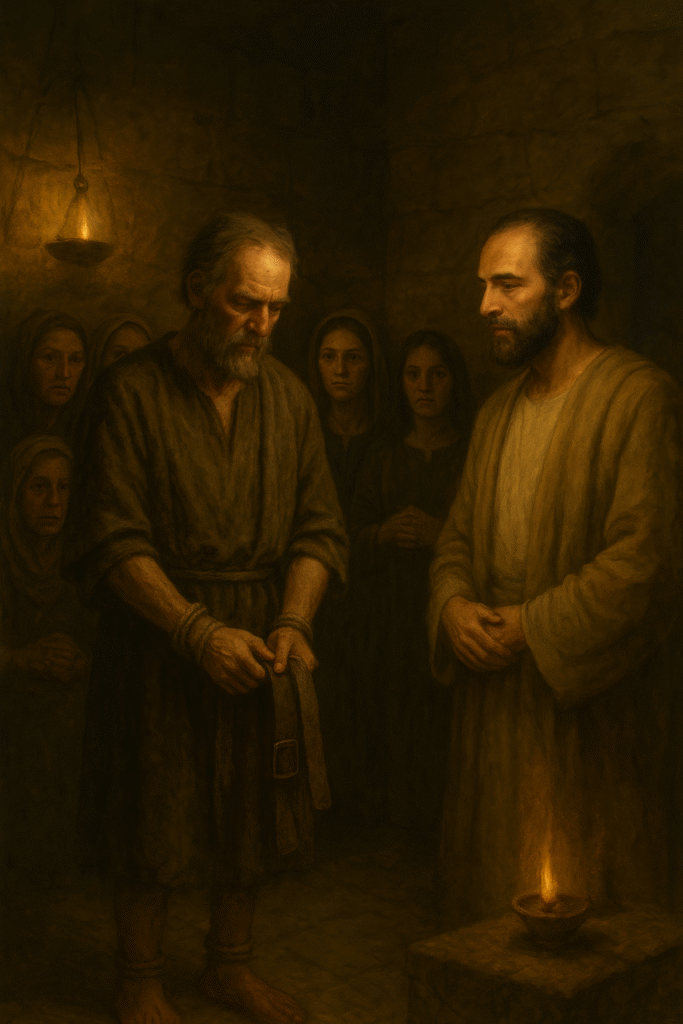
Acts 21- Costly Obedience Acts 21 reads like a chapter filled with emotion, tension, and deep spiritual clarity. Paul is moving with purpose, yet every step of his journey carries weight. What makes this passage so powerful is that it shows us what obedience looks like when it is costly, confusing, and opposed by the people who love you. Paul’s journey takes him along the coastline, from Cos to Rhodes to Patara, until he finally finds a ship strong enough for a longer voyage to Tyre. When he arrives, something unexpected happens. The believers in Tyre, through the Spirit, begin urging him not to go to Jerusalem. This seems confusing because earlier the Holy Spirit had already directed Paul to go there (Acts 19:21). Later Paul himself says he is “constrained by the Spirit” and knows imprisonment awaits him (Acts 20:22 to 23). So what exactly was happening?The believers in Tyre were picking up correctly that danger was ahead, but they interpreted the danger as a sign to avoid the assignment. Paul had already settled in his heart what God wanted. Sometimes God will show others what is coming, but He will show you what to do. After leaving Tyre Paul stayed in Caesarea at the home of Philip the evangelist. This same Philip had once preached in Samaria and baptized the Ethiopian official (Acts 8). Scripture tells us Philip had “four unmarried daughters who prophesied.” Their presence reminds us that God has always used women as vessels of His voice. This is exactly what Joel prophesied and Peter preached at Pentecost: “your sons and your daughters will prophesy” (Acts 2:17). Then comes Agabus.Agabus is not a new face in Acts. Years earlier he had accurately prophesied a widespread famine during the reign of Claudius (Acts 11:27 to 28). His track record was solid. He arrives from Judea, takes Paul’s belt, and performs a symbolic prophetic act, similar to what Old Testament prophets often did. Jeremiah wore a ruined waistband to warn Israel, and Isaiah walked barefoot for three years as a sign to Egypt and Ethiopia. Agabus binds his own hands and feet with Paul’s belt and says, “The Holy Spirit says this is how the Jews in Jerusalem will bind the owner of this belt and hand him over to the Gentiles” (Acts 21:11). The message was clear. Danger was certain. But the interpretation from the people around Paul was different from Paul’s interpretation. They begged him not to go. Paul’s response is one of the most moving statements in all of Acts.“Why are you weeping and breaking my heart? I am ready not only to be bound but also to die in Jerusalem for the name of the Lord Jesus.” In other words:Do not make obedience harder for me. I have already surrendered. Once they realized Paul could not be persuaded, his friends said, “Let the will of the Lord be done.” This is maturity.It is the moment when we release our desire to protect someone and agree with God’s plan for their life. Paul reached Jerusalem with joy from the believers there. The elders praised God for the work He had done among the Gentiles. Yet they warned Paul of rumors claiming he was teaching Jewish believers to abandon the law of Moses and ignore circumcision. The rumors were false. Paul never told Jewish Christians to stop honoring their heritage. He only taught that Gentiles did not need to become Jews in order to follow Christ. To quiet the gossip, the leaders encouraged Paul to join others in completing a Nazirite vow. This included purification, avoiding certain foods, and eventually cutting one’s hair as an offering to God (Numbers 6). Paul agreed out of humility and for the sake of unity. He did not compromise truth. He used wisdom. But even with wisdom trouble came.Jews from Asia, who had seen Paul’s ministry in Ephesus, accused him of bringing a Gentile into the temple. The accusation was false. But the crowd did not wait for proof. They dragged Paul out and began beating him. The temple guards shut the doors to prevent further disturbance. Roman soldiers rushed in from the Tower of Antonia, the military post connected to the temple grounds. They grabbed Paul and bound him with chains. The tribune assumed he was a dangerous criminal, possibly even the Egyptian rebel Josephus mentions in history. Right in the middle of the chaos Paul made a request.“May I speak to the people?”In chains, misunderstood, and nearly killed, Paul still wanted to preach. Nothing stops a surrendered servant.Nothing silences someone who has already died to themselves.This is what obedience looks like. It is not reckless. It is resolute. Acts 21 shows us that sometimes God calls us into situations where we will be misunderstood. Sometimes obedience will cost us our comfort and our reputation. Sometimes it will break the hearts of the people who care about us. But the safest place for a believer will always be the center of God’s will. Acts 21 reveals Paul’s determined obedience as he journeys toward Jerusalem despite repeated warnings of danger. Through the prophecies of the believers in Tyre, the prophetic word of Agabus, and the concern of his friends, Paul remains steadfast in what the Holy Spirit had already revealed to him. The chapter highlights the ministry of Philip’s prophesying daughters, Paul’s humility in taking a Nazirite vow to promote unity, and the violent misunderstanding that leads to his arrest. It reminds us that obedience is not always comfortable, but God’s purpose is always sure. PrayerLord,Help me follow You even when the path feels uncertain. Teach me to recognize Your voice above every other voice. Give me the courage of Paul, the discernment of Agabus, and the tenderness of those believers who cared deeply for him. Strengthen my heart when obedience feels costly. Let Your will be done in my life, and let my life bring honor to the name of Jesus. Amen.

Acts 21- To the Ends of the Earth Read More »

Acts- To the Ends of the Earth- Day 19

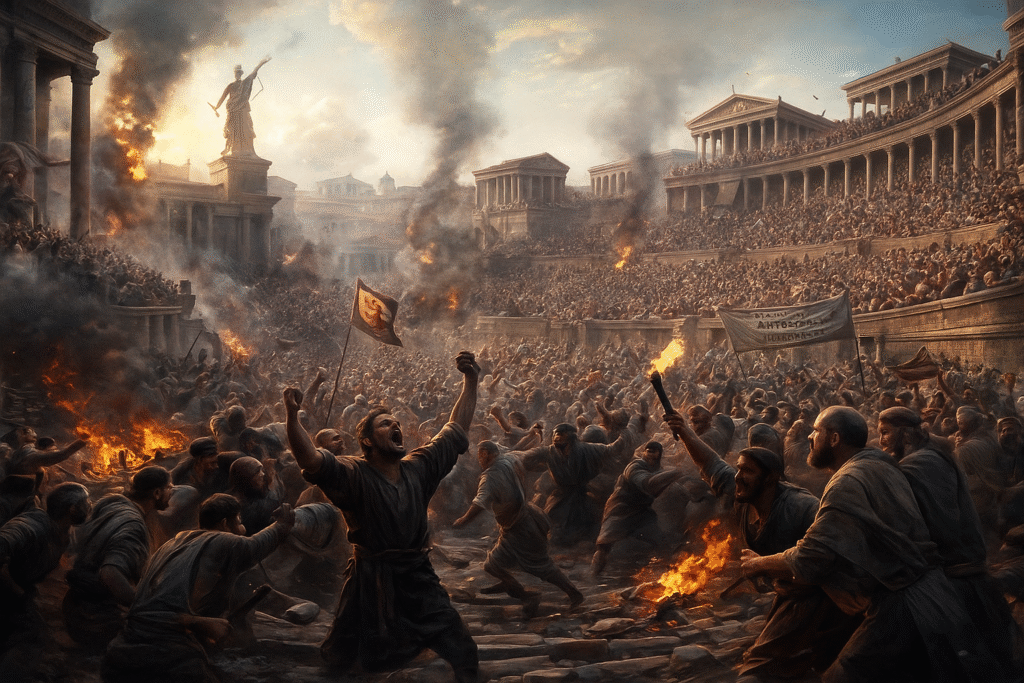
Acts 19-Riots, Rage and Redemption Acts 19 opens with Paul arriving in Ephesus while Apollos is ministering in Corinth. Right away, Paul meets a group of disciples faithful followers of John the Baptist who believed in the coming Messiah but hadn’t yet heard the full story. Paul asks them a simple but life-changing question: “Did you receive the Holy Spirit when you believed?” (Acts 19:2). Their response is almost heartbreaking “We have not even heard that there is a Holy Spirit.” Many of them had likely left Palestine before Jesus’ ministry began. They knew John’s message of repentance but hadn’t yet encountered Jesus or the outpouring of the Spirit. So Paul gently explains the gospel, and once they learn that Jesus is the One John pointed to, they are baptized “in the name of the Lord Jesus” (Acts 19:5). Immediately after, Paul lays hands on them and the Holy Spirit comes upon them, they speak in tongues and prophesy just like the believers at Pentecost. What a beautiful reminder that God never leaves sincere seekers behind. When we respond to the truth we know, He always leads us into deeper truth. The Word Spreads Across Asia Paul spends about three years in Ephesus teaching, discipling and strengthening the believers (Acts 20:31). Acts tells us that during this time “all the residents of Asia” heard the word of the Lord (Acts 19:10). Paul preached in the major city but equipped others to carry the message outward. This is discipleship in action multiplication, not maintenance. Even unusual miracles happened. People took handkerchiefs and aprons that Paul had touched and used them to help the sick (Acts 19:12). These items weren’t magical. They simply carried evidence of God’s power in Paul’s life. But not everyone responded with faith. Some itinerant Jewish exorcists tried using the name of Jesus without actually knowing Him. The evil spirit replied, “Jesus I know, and Paul I recognize, but who are you?” (Acts 19:15). Identity without intimacy has no authority. Revival Awakens Repentance As the gospel spread, people began confessing their sins and turning away from occult practices. Many brought their magic scrolls which were extremely valuable and publicly burned them (Acts 19:19). Their desire to honor Jesus outweighed the cost. Sometimes breakthrough requires letting go of what once defined or bound us. For some, it was a scroll. For us, it may be a mindset, relationship, habit or identity that doesn’t serve who God is calling us to become. A City in Uproar Ephesus was home to the great temple of Artemis one of the wonders of the ancient world. Craftsmen made a living selling silver shrines of the goddess. So when people began turning to Christ, business began to dry up. Threatened in their wallets and pride, the craftsmen stirred up a riot shouting, “Great is Artemis of the Ephesians!” (Acts 19:28). The crowds dragged Paul’s companions into the massive Ephesian theater, a venue that held more than twenty thousand people. Yet even in this chaos, God placed people in the right positions. The Asiarchs, respected officials in the Roman imperial cult, warned Paul not to enter the arena (Acts 19:31). The town clerk eventually quieted the mob, reminding them that the courts were available to settle disputes properly and that rioting could bring consequences from Rome. His words reveal something important the gospel was not guilty of disrupting public order. Even unbelievers could see that the movement of Jesus’ followers wasn’t lawless or reckless. It was the truth at work, confronting idols, systems and beliefs with quiet but steady power. And here’s the lesson tucked in:when people resist due process, it’s often because they know the truth will expose what they’re hiding. Acts 19 shows us a city shaken not by noise or force but by the quiet, undeniable power of the Holy Spirit. Paul meets sincere seekers who only knew part of the story, and God faithfully completes what was missing. Revival begins with revelation, but it deepens through repentance—people willingly lay down what once bound them because Jesus has become worth more. And even as opposition rises, God places the right people in the right places to protect His work. The gospel doesn’t need chaos to make an impact. It transforms hearts, households and whole communities with truth, love and power. And just like in Ephesus, God is still calling women and men today to step into deeper truth, greater courage and unshakeable faith. PrayerLord, thank You for meeting us right where we are, just as You met the disciples of John in Ephesus. Open our hearts to receive every part of Your truth and fill us again with Your Holy Spirit. Give us the courage to surrender anything that competes with Your voice in our lives. Help us walk boldly yet wisely in a world full of conflicting beliefs. Strengthen us to stand firm in holiness, humble obedience and spiritual authority rooted in intimacy with You. And just as You used Paul, Priscilla, Aquila and the believers in Ephesus, use us as vessels of revival in our homes, workplaces and communities. Let Your presence shift atmospheres and draw hearts to Jesus. Amen.  

Acts- To the Ends of the Earth- Day 19 Read More »

Review Your Cart
0
Add Coupon Code
Subtotal